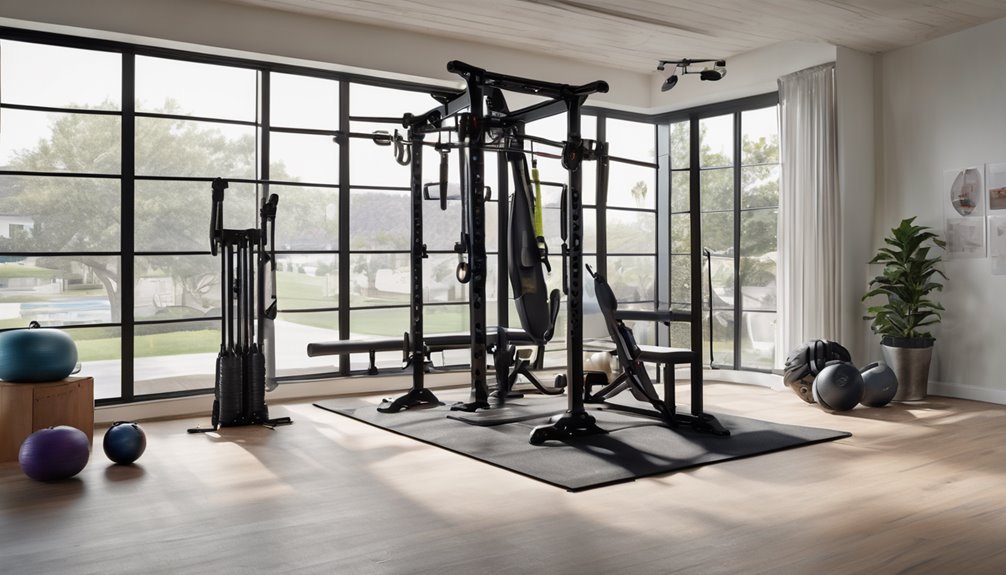
For a total-body workout in one setup, you’ll want versatility, compact design, and solid durability. Start with a Push Up Board with resistance bands and an ab roller wheel for chest, triceps, and core. Pair it with a Yoleo adjustable weight bench for full-body incline, decline, and flat moves. Then add a Fitvids all-in-one full-body gym with a pulley system to hit pulling and rowing motions across major muscle groups. Want to see why these three fit? You’ll learn more.
Key Takeaways
- All-in-One Gym Systems cover push, pull, squat, hinge/row, and rotation movements in a single setup for total-body training.
- The three highlighted options offer foldable, space-saving designs with adjustable resistance and color-coded zones for efficiency.
- Durable steel construction, reinforced joints, and high-tension cables ensure safety and longevity during progressive workouts.
- Integrated pulley systems and weight stacks maximize exercise variety while minimizing the need for extra equipment.
- Quick setup, portability, and value-driven design reduce clutter and overall cost compared to multiple separate machines.
Push Up Board Home Gym with Resistance Bands and Ab Roller Wheel (Full Body Workout at Home)

If you’re looking for a compact, all-in-one home setup, the Push Up Board Home Gym with Resistance Bands and Ab Roller Wheel is ideal for anyone short on space but committed to full-body workouts. This portable system combines a foldable push-up board, 3-section bar, 6 resistance bands, ankle straps, door anchor, and an ab roller wheel, plus a Pilates bar and 20 accessories. Color-coded zones target chest, triceps, shoulders, and back, boosting efficiency. It replaces bulky gym gear, offering full-body training at home with lightweight stability, adaptable intensity, and a support team answering questions within 24 hours.
Best For: Anyone seeking a compact, all-in-one home gym solution for full-body workouts with adjustable intensity.
Pros:
- Versatile all-in-one system (push-up board, resistance bands, ab roller, door anchor, ankle straps, Pilates bar) for diverse exercises.
- Color-coded zones target specific muscle groups (chest, triceps, shoulders, back) to improve efficiency.
- Space-saving, portable, and cost-effective compared to traditional gym equipment.
Cons:
- May require a learning curve to use the color-coded board effectively for proper form.
- Smaller or less stable surfaces could be less comfortable for higher-impact routines.
- Assembly and setup time could be longer than using a single-purpose device.
Yoleo Adjustable Weight Bench for Full Body Workout

The Yoleo Adjustable Weight Bench stands out for its 84-position adjustability, letting you tailor incline, decline, or flat setups with quick, ladder-style changes in seconds—ideal for a home gym where variety and space efficiency matter. Built with heavy-duty steel, it delivers solid support through a double-triangle frame and double-pivot supports. You get 7 back, 4 seat, and 3 leg adjustments for precise positioning, plus fast, secure changes. When folded, it measures 31.5L x 12.6W x 13H and weighs about 23.1 pounds, then unfolds to 41L x 12.6W x 42.5H, fitting tight spaces. High-density foam paddings and PU leather enhance comfort and durability. Replacement service available.
Best For: People with limited space who want a versatile, adjustable bench for full-body home workouts and quick incline/decline/flat setups.
Pros:
- 84 adjustable positions with ladder-style quick changes for fast transitions
- Heavy-duty steel frame with double-triangle structure for solid stability
- Compact folded size and light weight (about 23.1 lb) for easy storage and portability
Cons:
- May be taller when fully extended (42.5H) for users needing ultra-low height
- 23.1 lb is light for some users seeking maximum stability on heavier lifts
- Assembly and setup details are not provided in the brief, which could affect initial setup experience
Fitvids Home Gym Equipment: All-in-One Full Body Workout Weight Machine with Pulley System and Seated Rowing
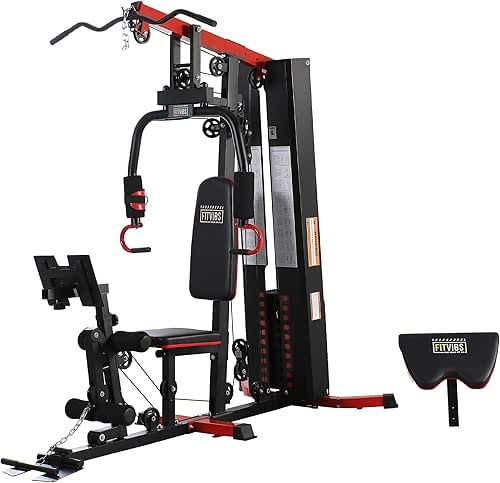
Fitvids Home Gym Equipment is a smart pick if you want an all-in-one full-body workout machine that packs 80% of muscle groups into a compact footprint. This multifunctional unit uses a weight stack and pulley system for versatile strength training, accommodating all fitness levels. It’s built with industrial-grade 1.5-inch steel tubing and aircraft cables, supporting up to 375 lbs user weight and 1000 lbs total, with 1000 lb-capacity tested cables. The 15-pulley high/low setup enables smooth motion for lat pulldowns, butterfly chest, rowing simulations, and more. At 42x68x78 inches, it fits tight spaces, including apartments, with a comfy seat. Includes 122.5 lb vinyl stack and a 2-year warranty.
Best For: Individuals seeking an all-in-one, space-saving home gym that can target a broad range of muscle groups with a versatile pulley system.
Pros:
- Comprehensive, full-body training with 80% of muscle groups covered via high/low pulleys and multiple stations.
- Durable construction using industrial-grade steel tubing and aircraft cables rated for high load; supports up to 375 lbs user weight and 1000 lbs total.
- Compact footprint (42x68x78 inches) with a comfortable seat, making it suitable for smaller spaces like apartments and garages.
Cons:
- 122.5 lb weight stack may limit progression for advanced users seeking heavier resistance.
- Assembly and setup may be time-consuming for first-time buyers.
- Limited standalone free-weight options; relies on the built-in weight stack and pulley system for resistance rather than traditional free weights.
Factors to Consider When Choosing Gym Equipment for All Over Workout
When choosing gear for a full-body setup, you’ll want versatile movement options and space-saving solutions that fit your room and routine. Look for equipment with adjustable intensity levels, durable build quality, and broad accessibility so you can train safely and consistently. Prioritize items that balance versatility, practicality, and value to support all-over workouts now and as your goals evolve.
Versatile Movement Options
Ever wondered how to pick gym gear that covers every angle of a total-body workout? Look for equipment that supports multiple movement patterns—pushing, pulling, squatting, hinge/rowing, and rotation—to hit your upper and lower body in one setup. Prioritize versatile accessories like adjustable benches, multiple attachment points, resistance bands, and pulley systems to enable varied angles and grips for comprehensive muscle engagement. Ensure the system allows both compound and isolation movements, so you target primary muscle groups and smaller stabilizers across workouts. Check for adjustable stance and seating options, including incline/decline benches and height-adjustable components, to fit different body sizes and range of motion needs. Favor modular designs that transition between strength, hypertrophy, and mobility routines without extra gear.
Space-Saving Solutions
Space is tight, so selecting space-saving gym gear matters. Look for compact, collapsible designs like foldable benches or push-up boards to maximize floor space in small rooms. Opt for multi-function systems, such as a combined weight stack with pulley or resistance bands, to reduce the need for separate machines. Prioritize adjustable components—inclines, levels, or color-coded attachments—to cover upper and lower body workouts without extra gear. Check overall footprint dimensions and folded sizes to guarantee the unit fits your available area when stored. Favor equipment with sturdy construction and high weight capacities to support a full-body routine while remaining space-efficient. A well-chosen setup keeps you versatile without crowding your space, letting you train consistently.
Adjustable Intensity Levels
Adjustable intensity levels let you tailor your all-over workout as you progress. You’ll appreciate how resistance, angle, or leverage shifts scale from beginner to advanced, letting you grow without swapping gear. A wide range of options—from bands and weight stacks to adjustable incline—enables targeted overload for both upper and lower body work. Quick-adjust mechanisms, like ladder-style benches or color-coded zones, keep your tempo steady between sets and cut downtime. Consistent progression supports genuine strength gains and metabolic conditioning without needing new equipment. Look for clear labeling and safety features on each setting to prevent overexertion and reduce injury risk during changes. With these cues, you optimize intensity while preserving flow and form throughout your session.
Durability and Build
Durability and build matter since sturdy gear keeps you safe and consistent through tough sessions. When you choose equipment, look for heavy-duty materials like steel frames and reinforced joints that handle frequent use and various resistance levels. Check weight capacity guarantees, including max user weight and total load, so performance stays safe across workouts. Prioritize durable, high-density padding and wear-resistant upholstery to endure long-term sessions. Verify the cable and pulley systems use high-strength, tested components—aircraft-grade cables rated for high tension and repeated cycles. Seek stable, well-braced designs, such as double-triangle or reinforced supports, to minimize wobble and maintain longevity during dynamic movements. In short, solid construction and tested components protect your investment and your body.
Equipment Accessibility
Accessibility matters most when you’re choosing gym gear for a full-body routine. Look for gear that’s easy to set up and portable, like foldable benches or compact all-in-one systems that fit tight spaces. Multi-function machines with adjustable components—incline/decline benches and pulley systems—let you reach both upper and lower body targets without extra gear. Ensure weight stacks or resistance bands are clearly labeled and color-coded to speed selection for different muscles. Favor a lightweight yet sturdy build to improve transport between rooms or storage areas without sacrificing stability during use. Quick-access design features, such as detachable rods or door anchors, expand exercise options with minimal rearrangement. Prioritize accessibility to keep your workouts efficient and adaptable.
Cost-Effectiveness Value
Is cost-effectiveness the key to a versatile all-over workout setup? Yes, and you’ll weigh total price against versatility and workout range. Consider how one setup can replace several machines, lowering overall cost. Foldable, space-saving designs cut expenses by reducing the need for large workout areas and bulky storage. All-in-one systems—like push-up boards with resistance bands and ab rollers—often deliver chest, back, legs, and core options at a fraction of separate gear prices. Durable construction and long-term warranties further boost value by cutting replacement and maintenance costs. Look for weight stacks, pulley systems, and adjustable benches that cover multiple resistance levels, letting different fitness stages share equipment without buying more. This maximizes value while supporting progressive training.
Frequently Asked Questions
How Do These Setups Compare in Space Efficiency?
Yes, these setups save space, letting you maximize floor area with compact footprints and integrated storage. You’ll fit more into tight rooms, use wall-mounts, multi-gyms, and foldable components, and still perform full-body routines efficiently.
Can Beginners Safely Use All-In-One Machines?
Yes, beginners can safely use all-in-one machines. Start with a trainer-approved setting, learn proper form, and progress slowly to avoid injuries. If discomfort arises, stop, reassess technique, and adjust resistance or movements accordingly.
Which Setup Targets Core Stability Best?
Core stability is best targeted by planks, anti-rotation movements, and controlled rollouts in your all-in-one setup. You’ll hold rigid, brace your core, and progress intensity to challenge endurance, rotation, and hip control safely.
Are There Hidden Maintenance Costs to Consider?
Yes, you’ll face hidden maintenance costs like replacements, parts, and occasional servicing; budget for wear-and-tear, proper lubrication, and potential warranty limits, so you stay balanced, safe, and ready without surprise expenses sneaking up on you.
What’s the Total Workout Time for Full-Body Sessions?
A full-body session typically runs 45 to 60 minutes. You’ll mix compound moves, push-pull pairs, and core work, adjusting rest to fit your fitness level, then finish with a brief cooldown to maximize gains and recovery.
Conclusion
You’ve got a compact setup that covers push, pull, and core in one go, so you can train any day, rain or shine. Pick adjustable gear for flexibility, and look for sturdy construction that lasts. Remember, variety beats volume when you’re short on space. Think of your routine like a quest, not a sprint—consistency wins. And yes, even in a world of streaming, don’t skip the fundamentals: warm up, breathe, and cool down. Flux capacitor optional, results not.