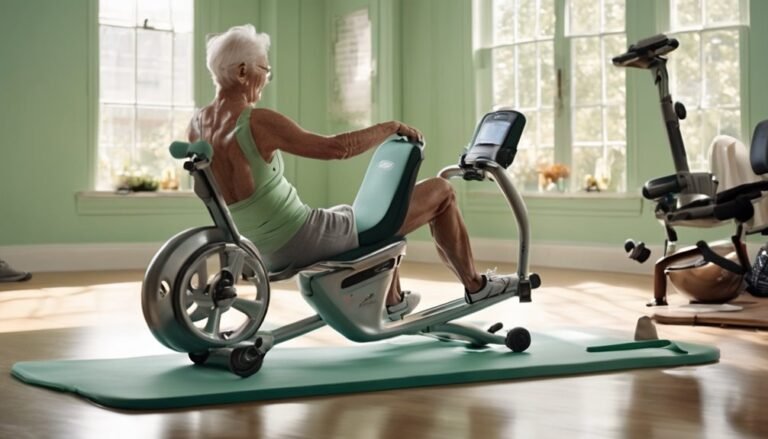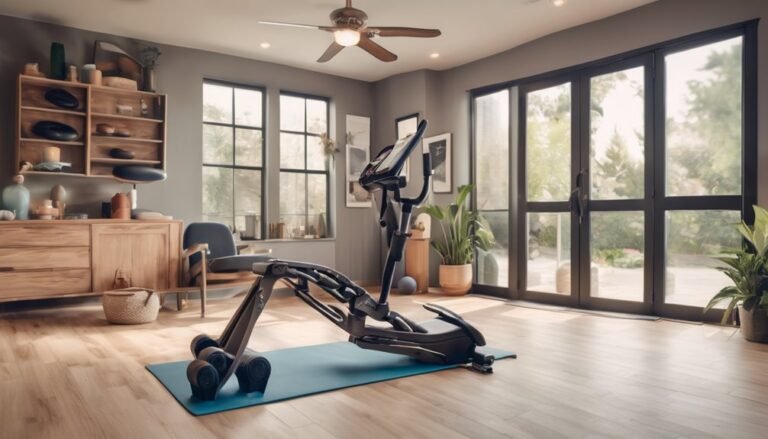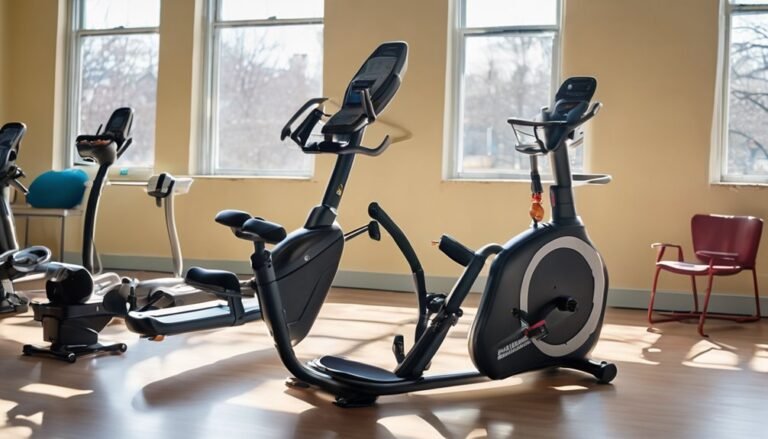
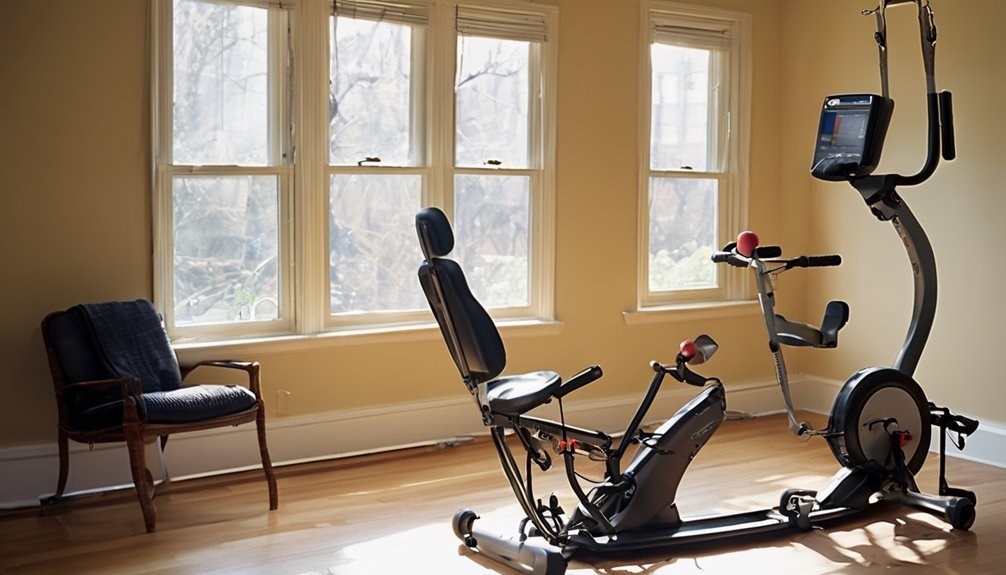
Here are five top picks you can use safely at home without strenuous impact. The Mini Under Desk Bike, Vaunn Pedal Exerciser, and Under Desk Elliptical models offer low‑impact, seated or standing options with adjustable resistance, clear displays, and easy storage. The 12‑mode Under Desk Mini Elliptical and Cubii JR1 suit seniors for progressive, repeatable workloads with forward/backward movement and remote controls. Each focuses on steady, guided progress—and you’ll uncover more about choosing the best fit as you continue.
| Mini Under Desk Bike Pedal Exerciser with LCD |
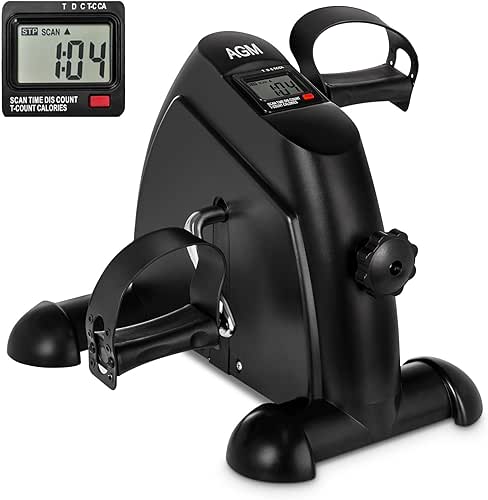
| Best Under-Desk Option | Use Case: Under-desk / table-top arm and leg exerciser | Target Area: Arms and legs | Resistance/Intensity Control: Adjustable resistance via tension knob | VIEW LATEST PRICE | Read Our Analysis |
| Vaunn Pedal Exerciser with Electronic Display for Therapy |

| Easy Therapy Aid | Use Case: Desk and therapy use (wrist/arm or under-desk) | Target Area: Shoulders, forearms, wrists, core, thighs, legs | Resistance/Intensity Control: Adjustable resistance via tension knob | VIEW LATEST PRICE | Read Our Analysis |
| Under Desk Elliptical Exercise Machine with Remote Control |
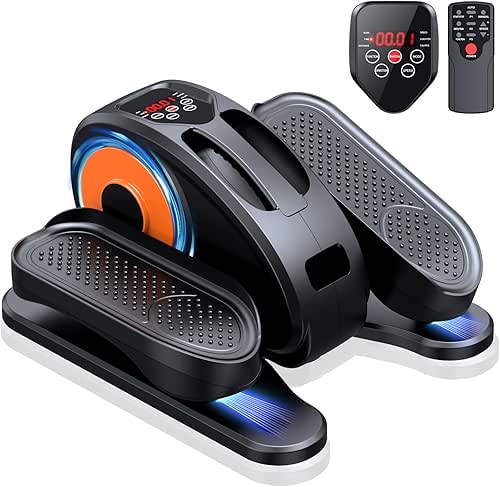
| Senior-Friendly Electric Elliptical | Use Case: Under-desk elliptical with remote | Target Area: Legs (with arm/hand use possible via seated motion) | Resistance/Intensity Control: Magnetic 12-level resistance | VIEW LATEST PRICE | Read Our Analysis |
| Under Desk Elliptical Mini Exerciser with 12 Modes |
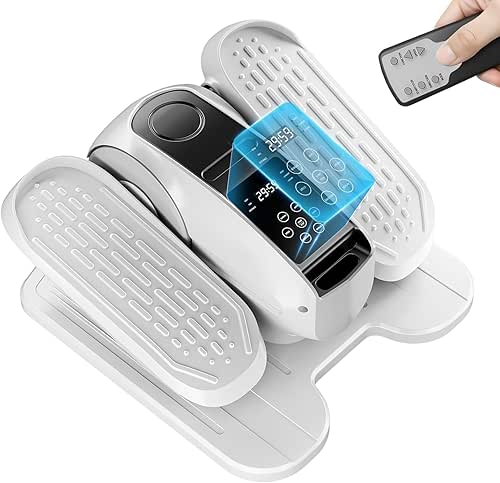
| Quiet Low-Impact Elliptical | Use Case: Under-desk elliptical (mini) for sitting | Target Area: Legs (knee/hip-friendly) | Resistance/Intensity Control: 12-speed levels with manual/auto modes | VIEW LATEST PRICE | Read Our Analysis |
| Cubii JR1 Under Desk Elliptical Pedal Exerciser |

| Senior Comfort Elliptical | Use Case: Under-desk elliptical / seated pedal exerciser | Target Area: Legs (under-desk seated) | Resistance/Intensity Control: 12-speed levels (built-in resistance) | VIEW LATEST PRICE | Read Our Analysis |
More Details on Our Top Picks
Mini Under Desk Bike Pedal Exerciser with LCD
The Mini Under Desk Bike Pedal Exerciser with LCD stands out for older adults who need a compact, versatile device that fits under a desk and can be used for both arm and leg workouts. You’ll strengthen muscles, improve joint range, and boost coordination with a single, portable unit. Use it on a table for arm pedaling or on the floor while seated for leg work. Its 12.6-inch height fits beneath most desks, and non-slip pedals with adjustable straps secure your feet. A tension knob varies resistance, while the LCD tracks time, speed, distance, and calories for clear progress.
- Use Case:Under-desk / table-top arm and leg exerciser
- Target Area:Arms and legs
- Resistance/Intensity Control:Adjustable resistance via tension knob
- Display/Tracking:LCD displays time, speed, distance, calories
- Mobility/Portability:Compact under-desk height; portable
- Safety/Comfort:Non-slip pedals with adjustable foot straps
- Additional Feature:Quick-assembly design
- Additional Feature:Adjustable foot straps
- Additional Feature:Under-desk height
Vaunn Pedal Exerciser with Electronic Display for Therapy
If you’re seeking a compact, therapy-focused pedal device, the Vaunn Pedal Exerciser with Electronic Display stands out for its adjustable resistance and built-in display, making it ideal for seniors prioritizing controlled, low-impact workouts. This pedal exerciser suits desk use as a wrist, arm, or leg trainer, promoting enjoyable routines without stressing joints. It tones muscles, improves circulation, and strengthens shoulders, forearms, wrists, core, thighs, and legs, benefiting arthritis or knee concerns and post-surgery recovery. An adjustable tension knob lets you tailor intensity, while a quick-release fold enables easy storage. Lightweight, portable, and ready, it remains fully assembled with minimal setup.
- Use Case:Desk and therapy use (wrist/arm or under-desk)
- Target Area:Shoulders, forearms, wrists, core, thighs, legs
- Resistance/Intensity Control:Adjustable resistance via tension knob
- Display/Tracking:Electronic display (tracks metrics)
- Mobility/Portability:Compact; quick-release folding
- Safety/Comfort:Adjustable tension; compact with easy storage
- Additional Feature:Folding portability
- Additional Feature:Wrist/arm placement
- Additional Feature:Therapy-friendly use
Under Desk Elliptical Exercise Machine with Remote Control
When you need a compact, low-impact option for at-home rehabilitation or gentle cardio, the GUGTTR Under Desk Elliptical with Remote Control stands out thanks to its silent, magnetically operated 12-speed system and convenient hand-held remote. This fully assembled, portable unit suits seniors and rehab use, offering Manual (12 speeds) and Auto (P1-P3) modes, with forward or backward pedal movement. It tracks speed, distance, time, calories, and steps on an LCD display, and the remote reduces bending and back strain. With a 2-year warranty and 500-lb max, it delivers steady, low-impact cardio. Rating: 4.4/5.
- Use Case:Under-desk elliptical with remote
- Target Area:Legs (with arm/hand use possible via seated motion)
- Resistance/Intensity Control:Magnetic 12-level resistance
- Display/Tracking:LCD display (speed, distance, time, calories, steps)
- Mobility/Portability:Fully assembled; portable; lightweight
- Safety/Comfort:Adjustable pedals; silent operation; remote control
- Additional Feature:Remote control included
- Additional Feature:12 speeds magnetic resistance
- Additional Feature:Forward/backward pedaling
Under Desk Elliptical Mini Exerciser with 12 Modes
Perfect for seniors needing low-impact cardio at home, the Under Desk Elliptical Mini Exerciser with 12 Modes stands out with its dual-mode system—manual plus three preset programs—offering 12 speed levels and forward/reverse motion for customizable, joint-friendly workouts. You get a compact, lightweight unit (5.2 kg) with a 45-degree LCD, remote control, and effortless transitions between manual and automatic modes. It targets leg strength, metabolism, and circulation while remaining quiet and unobtrusive. Safety is solid: four anti-slip suction cups and oversized pedals deliver a stable, massage-like feel. Use it during tasks for steady, convenient cardio without gym time.
- Use Case:Under-desk elliptical (mini) for sitting
- Target Area:Legs (knee/hip-friendly)
- Resistance/Intensity Control:12-speed levels with manual/auto modes
- Display/Tracking:45-degree LCD panel (speed/distance/time/calories)
- Mobility/Portability:Lightweight and compact; easy to move/store
- Safety/Comfort:Non-slip pedals; four anti-slip suction cups
- Additional Feature:12 speed modes
- Additional Feature:45-degree LCD panel
- Additional Feature:Four anti-slip suction cups
Cubii JR1 Under Desk Elliptical Pedal Exerciser
The Cubii JR1 Under Desk Elliptical is the ideal choice for seniors and rehab patients who need a compact, seated way to stay active at home or in the office. You exercise quietly at a desk, burning calories and improving mobility without leaving your chair. This low-impact, ultra-smooth pedal motion helps you build strength and reach wellness goals daily. The built-in LCD tracks calories, strides, and distance, while the Cubii app lets you log stats for added features. Compact, desk-friendly, and easy to use, it suits home workouts, office routines, and gentle rehabilitation.
- Use Case:Under-desk elliptical / seated pedal exerciser
- Target Area:Legs (under-desk seated)
- Resistance/Intensity Control:12-speed levels (built-in resistance)
- Display/Tracking:Built-in LCD display (calories, strides, distance)
- Mobility/Portability:Compact under-desk design
- Safety/Comfort:Non-slip pedals; compact ergonomic design
- Additional Feature:Built-in LCD tracker
- Additional Feature:App integration option
- Additional Feature:Senior-friendly design
Factors to Consider When Choosing Exercise Equipment for Elderly at Home

When you choose equipment, prioritize safety and stability to prevent slips and falls. Look for ease of use, low-impact designs that protect joints, and clear operating instructions. Consider space, portability, and adjustable resistance to fit changing needs and room layouts as you maintain a sensible balance of support and challenge.
Safety and Stability
Ever wonder how to pick equipment that stays steady and safe for daily use? Start with non-slip pedals and secure straps to prevent foot slippage during use, then confirm a stable base with wide feet or suction cups to minimize tipping on various floor surfaces. Prioritize machines offering low to moderate resistance to reduce joint strain and fall risk, and ensure quiet, smooth operation to avoid startling you or creating home distraction. Check for clear, easy-to-reach control adjustments, preferring remote or front-access controls to minimize bending or twisting. These factors boost safety without sacrificing effectiveness, helping you maintain confidence during daily workouts. In sum, stability, controlled effort, and accessible controls are essential for risk-aware at-home exercise.
Ease of Use
Easy use starts with straightforward setup and quick readiness, so you can start exercising without a fuss. Choose equipment with simple setup and minimal assembly to reduce frustration and ensure quick use. Prioritize devices that operate at desk or seated positions to minimize bending and standing requirements. Look for intuitive controls, such as a clearly labeled tension knob or easy-to-reach remote, to adjust resistance and modes without strain. Favor models with an easy-to-read LCD display showing time, distance, calories, and speed for accessible self-monitoring. Ensure the equipment includes non-slip pedals or feet and stable footing to prevent slips during use. In short, evaluate setup simplicity, seated operation, intuitive control, clear monitoring, and solid stability for reliable, user-friendly workouts.
Low-Impact Design
Low-impact design minimizes joint stress whereas still building cardiovascular health. When you choose equipment, prioritize smooth, reversible pedaling and adjustable resistance to enable gentle progression for seniors. Look for seated or under-desk options that let you stay active without standing, especially if balance is a concern. Quiet operation matters because it supports a calm home environment and higher adherence, so seek machines that run softly. Stability is nonnegotiable: ensure wide, non-slip pedals and a solid foundation to prevent slips or falls during workouts. Favor designs that offer both seated and standing versatility, so you can adapt to changing needs without changing devices. In sum, opt for safe, controllable resistance, stable footing, and quiet performance to sustain long-term use.
Space & Portability
When space is tight, prioritize compact, under-desk or small-footprint designs that fit neatly in your home. You’ll benefit from lightweight, portable units with easy carry or storage features for quick relocation. Ensure the product has a stable base with non-slip pedals or suction cups to prevent movement during use. Check that the device is 12 inches or shorter in height to comfortably fit under most desks. Favor models with simple assembly and quick-release folding mechanisms for convenient storage when not in use. Look for straightforward setup so you can start exercising without frustration. Prioritize clear, practical specs over flashy features, and choose equipment that remains stable and accessible, even as you move between rooms or rearrange your space.
Adjustable Resistance
In choosing home exercise gear for an older adult, adjustable resistance matters as it lets you start with lighter effort and gradually build strength, reducing injury risk. You want a wide resistance range to cover gentle range-of-motion work for arthritis or recovery and tougher sessions for cardiovascular benefits. Tension controls should deliver precise, smooth adjustments without sudden jumps that could startle or strain an elderly user. Clear feedback on the current resistance level helps you monitor effort and tailor sessions to daily energy and health goals. Consistent resistance across sessions supports tracking progress, making gradual increments feasible and motivating. Prioritize systems with reliable, repeatable settings so you can progression remains predictable and measurable over time.
Monitoring Metrics
Monitoring metrics matter since clear data helps you tailor workouts safely and track progress over time. You’ll want LCD or digital displays that show time, speed, distance, calories burned, and step count to monitor daily activity and progress accurately. Look for adjustable resistance or tension controls so you can tailor intensity to your comfort and safety levels without compromising form. Modes and speeds, including multiple levels and forward/backward pedal options, provide a gradual, varied workload that supports progressive overload without risking strain. Remote control or easy-access controls reduce bending and setup complexity, boosting safety for you. Built-in tracking features or app compatibility enable reliable recording of workouts and long-term fitness trends for ongoing evaluation.
Frequently Asked Questions
How Loud Are These Under-Desk Machines During Operation?
Under-desk machines vary, but many operate quietly, typically in the 40–60 decibel range during use. You’ll notice a soft hum rather than a clatter, so you can work or converse nearby without shouting. If you need near-silent operation, choose models marketed as silent or with vibration isolation and rubber feet. Check decibel specs and read user reviews, focusing on long-term noise consistency. Maintenance, mat placement, and surface friction can influence perceived sound.
Are These Devices Suitable for Users With Knee Implants?
Yes, these devices can be suitable with knee implants, but you must choose low-impact options and consult your clinician first. Look for machines offering smooth ranges of motion, gentle resistance, and adjustable cadence to protect your joint. Avoid high-impact or deep bending movements. Start slow, monitor pain, and stop if swelling or instability appears. Prioritize stability, proper seating, and clear instructions, then progressively increase use as tolerated.
What Is the Typical Maintenance Requirement for These Units?
Maintenance for these units is typically straightforward—check cables and bolts monthly, lubricate moving parts as advised, and replace worn pads promptly. You should inspect safety features weekly and keep the device clean to prevent wear. Follow the manufacturer’s service intervals for professional servicing. Track warranty coverage and contact support if any unusual noise or instability arises. You’ll extend lifespan by keeping it dry, away from extreme heat, and using only recommended accessories.
Do These Machines Require Assembling Tools or Professional Setup?
Yes, most of these machines come with straightforward assembly kits or require minimal professional setup, but you can usually finish it in under an hour. You’ll typically need basic tools included, and instructional videos help a lot. If you’re unsure, opt for models with tool-free assembly or customer support. After setup, perform a quick safety check and test functions before use. You’ll be glad you verified everything—confidence and safety go hand in hand.
Can They Connect to Smartphones or Fitness Apps?
They can connect to smartphones or fitness apps, but it varies by model. Look for Bluetooth or Wi‑Fi, clear pairing steps, and app compatibility with your device. Check if heart-rate monitoring, progress dashboards, and guided workouts are included. Some entry‑level machines offer basic syncing; premium units provide richer analytics. Consider privacy settings and data ownership. If you value motivation and tracking, prioritize models with seamless app integration and regular software updates.