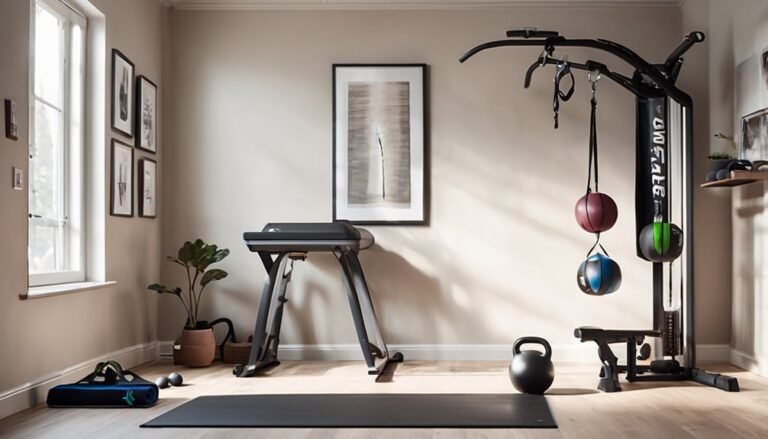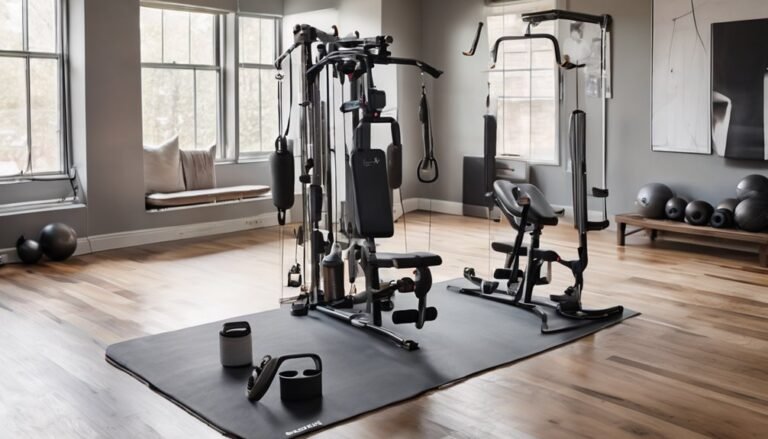
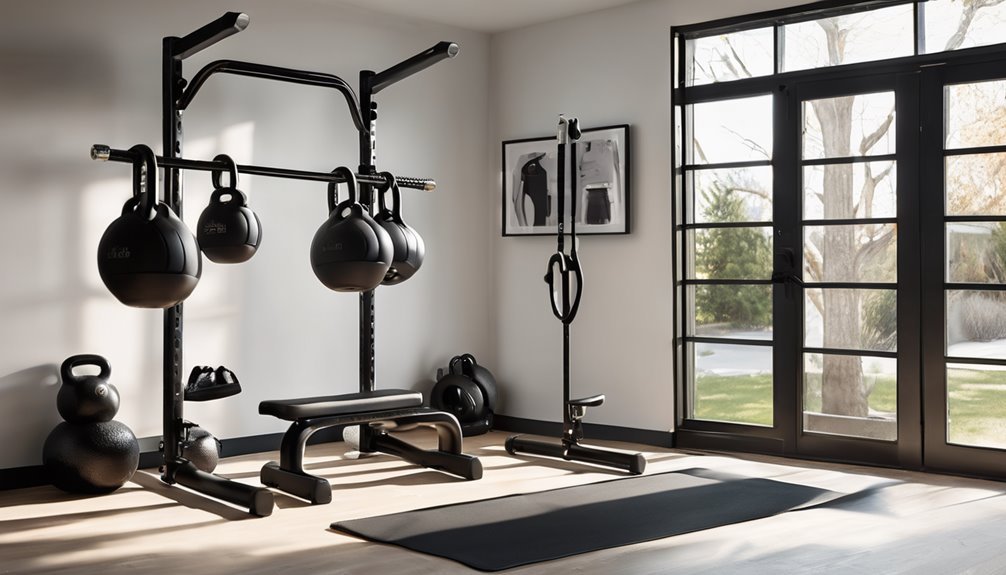
Looking for big gains in a tiny footprint? Start with a Push Up Board Home Gym with Resistance Bands and Ab Roller Wheel for a full-body burn, plus adjustable Weight Benches that fold away and offer multiple incline positions. Add the SincMill Home Gym Multifunctional set for versatile, space-saving workouts with leg pedal options. When choosing, prioritize compact design, durability, and included accessories. Curious how these fit your space and routine? Keep going to see the details.
Key Takeaways
- Choose space-saving, foldable or vertical-storage equipment to maximize a small gym footprint without sacrificing functionality.
- Prioritize multifunctional systems that cover push, pull, legs, and core with interchangeable attachments.
- Look for durable frames (thick steel), reinforced joints, and high-density padding to ensure long-term reliability.
- Ensure easy assembly with pre-assembled parts and included tools for quick setup and ongoing use.
- Verify compatibility with standard weights and accessories (1-inch posts, leg pedals, bands) for expandability.
Push Up Board Home Gym with Resistance Bands and Ab Roller Wheel (Full Body Workout at Home)

If you’re short on space but want a full-body workout, this Push Up Board Home Gym stands out with its color-coded, target-specific design. You’ll get a portable system that packs a foldable push-up board, a 3-section bar, six resistance bands, ankle straps, a door anchor, and an ab roller wheel. Use color targets to hit chest, triceps, shoulders, and back efficiently, boosting workout impact by up to 80%. It replaces bulky gym gear, stays lightweight yet stable, and fits diverse routines—from upper to lower body—while remaining cost-effective. Suitable for all levels, it invites friends to train together anytime. 24-hour support included.
Best For: Individuals with limited space seeking a full-body home workout solution that’s portable, versatile, and budget-friendly.
Pros:
- Color-coded, target-specific design to efficiently hit different muscle groups (chest, triceps, shoulders, back).
- Comprehensive all-in-one system (foldable push-up board, bar, resistance bands, ankle straps, door anchor, ab roller) for diverse workouts.
- Lightweight yet stable, suitable for all fitness levels and easy to share with friends.
Cons:
- May require some setup time to attach bands and align color targets for each exercise.
- Resistance levels depend on bands and user strength; may not replace heavy gym weights for advanced lifters.
- Foldable design and multiple components could be cumbersome for very small spaces or travel use.
Adjustable Weight Bench for Home Gym with Free Installation
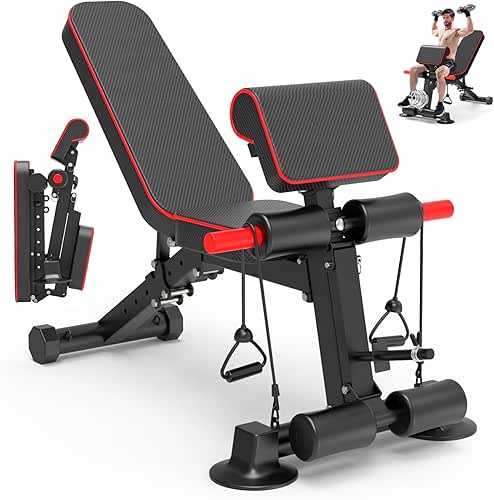
This adjustable weight bench stands out for small spaces thanks to its foldable design, letting you store it out of the way when workouts are done whereas still expanding to a full 51.57 x 13.4 x 31.5 inches for a stable, versatile setup. You’ll train chest, shoulders, back, and abs with 7 backrest positions for versatile intensity. Comfort comes from high-density foam padding, ergonomic seating, and soft leather covering that reduces fatigue while securing your body. Assembly is quick, with most parts pre-assembled and included tools. Fold for storage at 51.57 x 13.4 x 11 inches; warranty supports peace of mind.
Best For: Home gym owners with limited space who want a versatile, foldable weight bench for chest, shoulders, back, and abs.
Pros:
- Foldable design saves space and enables easy storage.
- 7 backrest positions provide versatile workout options.
- Comfortable padding and soft leather for reduced fatigue during workouts.
Cons:
- Does not include leg weights.
- Requires assembly (though fans with pre-assembled parts and included tools).
- Warranty on pads is shorter (30 days) compared to frame (1 year).
SincMill Home Gym Multifunctional Full Body Workout Equipment for Home Exercise Fitness
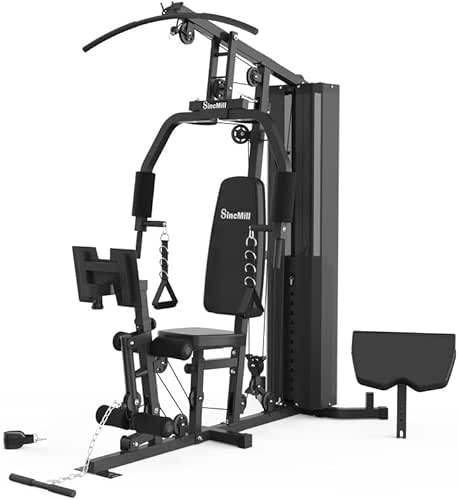
The SincMill Home Gym Multifunctional Full Body Workout Equipment is a solid choice for small-space setups thanks to its all-in-one design that targets multiple muscle groups with a single frame. You’ll appreciate its durable thick steel frame and weight guards, built to handle varied loads as you progress. Its updated design adds a leg exercise pedal, expanding options for leg and lower-body training beyond typical compact machines. You receive professional support if issues arise, and installation is straightforward with a detailed guide and a tutorial video. Setup takes about thirty minutes, with organized screws and nuts for quick assembly.
Best For: Small-space home gyms or individuals seeking an all-in-one, durable, multi-function workout solution with leg training options.
Pros:
- Solid, durable thick steel frame and weight guards for longevity and higher weight capability
- All-in-one design that targets multiple muscle groups, saving space
- Updated leg exercise pedal expands lower-body training options
Cons:
- May require up to ~30 minutes for assembly despite organized hardware
- May not replace specialized machines for advanced or very specific workouts
- Dependence on included installation guide and video; if unavailable, setup could be slower
Factors to Consider When Choosing Equipment for Small Home Gym
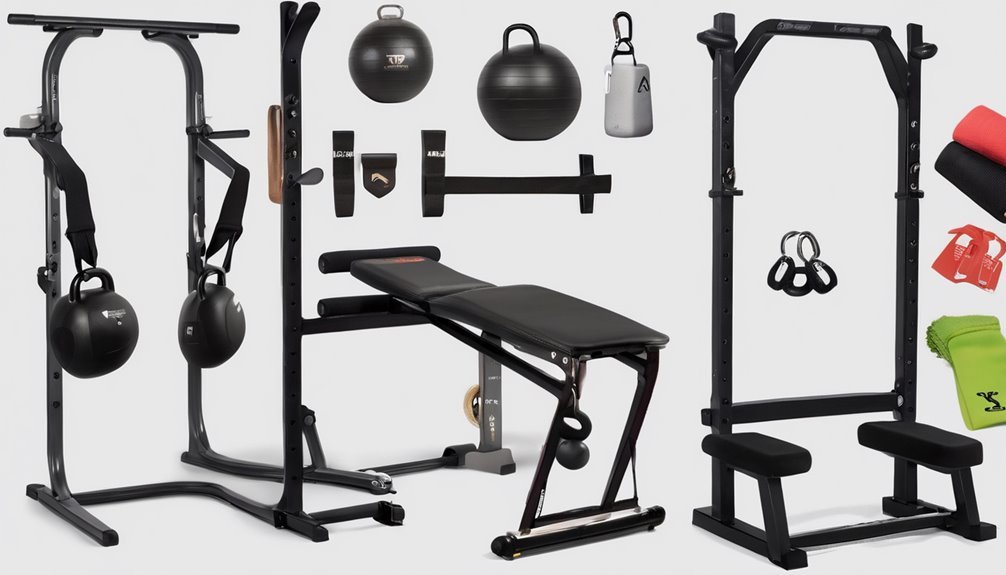
When you pick gear for a small home gym, prioritize space-saving design that still fits your routine. Look for multifunctional use, sturdy durability, and materials that withstand regular use in a compact footprint. Check weight capacity, assembly ease, and how a piece balances practicality with long-term reliability.
Space-Saving Design
Space is at a premium in small homes, so choose gear that folds, stacks, or stores vertically to free floor area. Start with a compact footprint: look for equipment that folds away or is easy to disassemble, so you can reclaim floor space after workouts. Favor multi-functional units that combine press, row, and leg extension to cut down total gear and clutter. Seek adjustable components and interchangeable attachments to cover multiple muscle groups without adding machines. Check if the unit can be disassembled or stored vertically to fit narrow spaces or closets. Prioritize lightweight, portable designs with stable bases to prevent tipping in tight, cluttered rooms. Aim for gear you can slide into a corner or a wardrobe when not in use. Efficient design keeps workouts convenient and room comfortable.
Multifunctional Use
If you want to maximize a small space, prioritize multifunctional equipment that targets multiple muscle groups and supports varied activities—strength, cardio, and flexibility—within one footprint. Choose modular systems with foldable boards, adjustable benches, and removable bars you can reconfigure for different exercises without extra machines. A single unit with interchangeable attachments—resistance bands, ankle straps, and a leg pedal—reduces clutter while expanding workout options. Look for built‑in guided routines or selectable resistance levels to keep training varied without increasing footprint. Prioritize durability and weight capacity so gear safely accommodates users of different sizes and diverse movements. By focusing on multifunctional design, you’ll preserve space while maintaining a wide, effective training spectrum.
Weight Capacity
A key factor is weight capacity, since it sets the maximum load your small home gym can safely handle during workouts. Weight capacity determines the safe limit your equipment can support, helping prevent structural failures and injuries in a compact space. Higher capacities usually mean sturdier frames and reinforced joints, which matter when you add free weights or resistance bands. For multi-user or family use, pick gear with a higher capacity to accommodate different body weights and strength levels. Always verify the combined weight of you plus attachments like plates, bands, or rollers to avoid exceeding the rated limit during sessions. If you expect progress, choose gear with a capacity well above your current max to allow future gains.
Assembly Ease
Assembling your small home gym should be quick and simple, not a puzzle you can’t solve. Look for pre-assembled parts or items that need minimal setup time to get you functional fast. Check whether the product includes an installation toolkit and clearly labeled screws and nuts to simplify the process. Favor designs with foldable components or compact packaging to ease storage in tight spaces. Consider units that provide step-by-step written instructions and an accompanying video tutorial to reduce setup complexity. Verify the claimed setup time and whether a single person can assemble it without professional help. Prioritize clarity in labeling, intuitive hardware, and user-friendly assembly steps so you can start training sooner rather than later.
Durability & Materials
Durability and materials determine how your small home gym stands up to daily use and the test of time. When shopping, pick a frame built from thick steel or reinforced aluminum to handle repeated use and heavier loads without flex. Look for quality welds, reinforced joints, and corrosion-resistant finishes so your setup stays sturdy in a home environment. Prioritize equipment with durable padding and upholstery—high-density foam covered in tear-resistant material—to resist wear over time. Inspect weight stacks, pins, and guide rods for smooth operation and minimal flex or wobble during exercises. Also consider load capacity and warranty coverage, which signal the manufacturer’s confidence in the product and predict long-term durability for your space.
Budget Value
Budget value hinges on cost per use, so prioritize versatile gear that delivers multiple functions in one footprint. In a small gym, seek multi-function items like benches with incline options or compact multi-gyms, which stretch your dollar by handling several movements. Foldable or wall-mounted equipment dramatically lowers footprint while preserving exercise variety, so consider options that tuck away when not in use. Durability and warranty matter for long-term value; choose solid builds that resist daily wear and come with solid coverage to cut future replacement costs. Don’t overlook essential accessories—resistance bands, mounts, and adapters extend exercise options without adding bulky gear. Balance upfront price with repeatable usage, ensuring each piece earns its keep through versatility, durability, and scalable capability.
Compatibility & Accessories
When you’re choosing gear for a small home gym, compatibility matters as much as versatility. Start by confirming the equipment fits standard weights, bars, and mounting points—think 1-inch weight posts and common door anchors—to avoid later upgrades. Check accessory interoperability, so resistance bands, ankle straps, and ab rollers work across multiple stations or boards instead of creating clutter. Look for clearly labeled attachment zones that align with your preferred muscle groups, simplifying quick switches between moves. Ensure any multi-function systems—push-up boards, benches, and bars—share compatible connectors or mounting hardware, preventing component phase-outs. Finally, consider included accessories like leg pedals, ankle straps, and floor mats to boost full-body workouts without extra purchases. Clear compatibility equals seamless variety.
Frequently Asked Questions
How Loud Is the Equipment During Use in Apartments?
In most apartments, equipment’s noise depends on the type you choose. You’ll notice treadmills and upright bikes louder than resistance bands or compact machines. If you opt for quiet models with magnetic resistance and rubber feet, you’ll keep disturbances low. Use mats, place equipment on shared walls away from neighbors, and schedule workouts earlier in the day. Consider using floor-padding and speaking softly during workouts to minimize vibrations and keep your space neighbor-friendly.
What’s the Total Setup Time for a Minimalist Gym?
Total setup time for a minimalist gym is usually under 30 minutes. You’ll unpack a few compact pieces, assemble a lightweight rack, and mount a wall-mounted setup if you’ve got the space. Keep essentials together in one tote, label bolts and tools, and pre-plan where everything parks. You’ll streamline by using multi-use gear and quick-connect accessories, so every session starts fast and stays efficient. With practice, you’ll cut setup to mere minutes.
Do These Machines Require Specialized Electrical Outlets?
“Measure twice, cut once.” No, these machines don’t require specialized outlets in most cases; standard 110–120V outlets handle most home gym equipment. You’ll typically need a dedicated circuit for heavy units, but you can share with other low-draw devices if you avoid peak loads. Check each machine’s amperage, use GFCI outlets in damp spaces, and keep cords tidy. If you’re unsure, consult an electrician before setup.
Can I Upgrade Components Without Replacing the Whole System?
Yes, you can upgrade components without replacing the whole system. Start with the power supply, weight plates, or resistance modules first, then swap sensors, displays, or handlebars as needed. Check compatibility guides, model numbers, and warranty terms to avoid voiding coverage. When upgrading, ensure proper installation, firmware updates, and secure connections. Prioritize modular parts from the same brand to maximize seamless integration and minimize downtime. This keeps your setup current without a full system overhaul.
Is Warranty Coverage Valid for Home-Based Commercial Use?
Warranty coverage for home-based commercial use varies by policy, but most providers carve it out or limit it considerably. You’ll commonly see exclusions for business, rental, or public-use scenarios, and repairs may void coverage if used commercially. Check your fine print or talk to your insurer; many allow limited commercial use with an upgraded plan. About 40% of warranties deny claims in strictly home-commercial setups. Read terms carefully before you assume coverage remains intact.