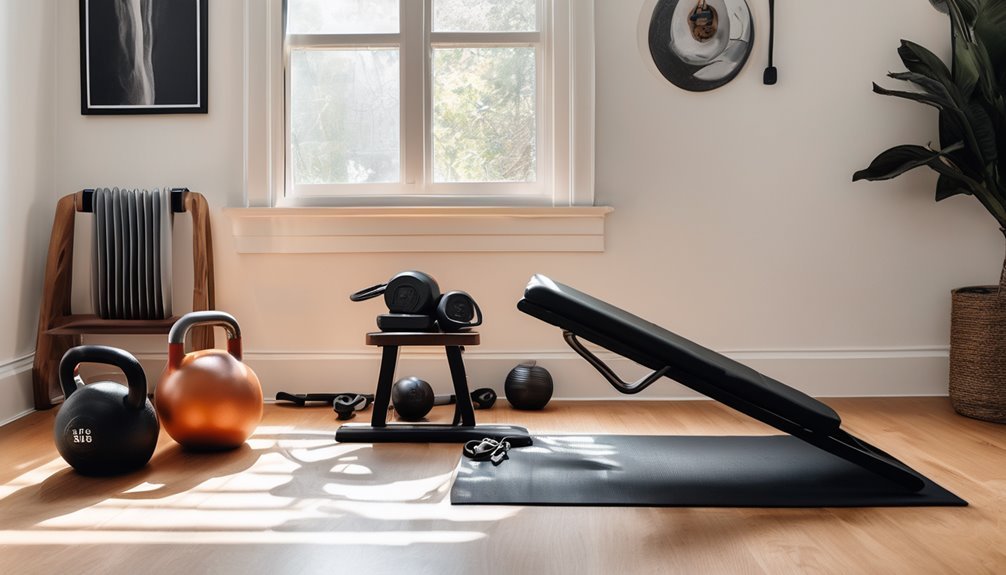
The three best small gear picks for your tight space are a Push Up Board Home Gym with Resistance Bands, a Multifunctional Home Gym Machine with a 100 lb weight stack, and the Fitvids All-in-One Home Gym with a 15-pulley system. Each unit packs multiple functions into a compact frame, supports scalable progress, and stores easily. They’re budget-friendly and versatile enough to cover upper and lower body work. Want more tips to optimize your setup? Keep reading for details.
Key Takeaways
- Foldable Push Up Board with resistance bands offers a compact, multi-target workout in a single portable unit.
- Multifunctional Home Gym with a 100 lb weight stack provides versatile upper/body movements in a small footprint.
- Fitvids All-in-One Gym features a 15-pulley system and 1000 lb-rated components for varied, space-efficient workouts.
- Space-saving design principles emphasize modular, foldable, and integrated-storage gear to minimize clutter.
- Use accessories (ankle straps, door anchors, bands) to expand exercise options without bulky equipment.
Push Up Board Home Gym with Accessories and Resistance Bands

If you’re tight on space but still want a full-body workout, the Push Up Board Home Gym with Accessories and Resistance Bands is your best bet. This portable system includes a Foldable Push Up Board, 3-section Bar, and 6 resistance bands, plus an ab roller wheel, ankle straps, door anchor, and more. You’ll target chest, triceps, shoulders, and back with color-coded zones, boosting efficiency by up to 80%. It replaces bulky gym gear, offering space-saving, cost-effective training at home. Suitable for all levels, it supports upper and lower body work, plus cardio, and invites friends to join. Customer support is ready within 24 hours.
Best For: This compact, all-in-one home gym is best for space-conscious individuals seeking a versatile, budget-friendly way to perform full-body workouts at home with adjustable intensity.
Pros:
- Space-saving and portable design replaces bulky gym equipment
- Color-coded zones target chest, triceps, shoulders, and back for efficient workouts
- Includes a wide range of accessories (foldable board, bar, bands, ankle straps, door anchor, ab roller) for diverse routines
Cons:
- Some users may find assembly/setup time initially burdensome
- May require additional space for certain full-body movements or floor exercises
- Durability and comfort can vary with cheaper resistance bands and components
Multifunctional Home Gym Machine with 100LB Weight Stack (Full Body Workout Station)
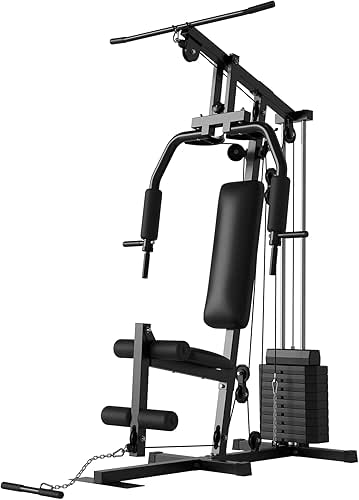
This multifunctional home gym machine with a 100LB weight stack is ideal for compact spaces, delivering a full-body workout without switching stations—thanks to dual-function press arms that switch between chest press and butterfly fly modes. You get LAT pulldown, chest press, leg extension, seated row, butterfly, and low row in one unit, supporting muscle growth, fat loss, and posture improvement. Built with a 7-strand steel cable system, high-density PU pulleys, reinforced tubing, and sealed bearings for durability and smooth, controlled motion. The 100LB stack adjusts quickly for progression, while its compact frame fits apartments, garages, or basements. Ships in 3 boxes with simple assembly.
Best For: Individuals seeking a compact, all-in-one home gym solution that delivers a full-body workout without station switching, suitable for apartments or small spaces.
Pros:
- All-in-one unit with LAT pulldown, chest press, leg extension, seated row, butterfly, and low row for full-body training.
- Quick-adjust 100LB weight stack supports gradual progression for beginners to advanced users.
- Durable construction with 7-strand steel cables, high-density PU pulleys, reinforced tubing, and sealed bearings for smooth, reliable operation.
Cons:
- 100LB weight stack may be limiting for very advanced users seeking heavier resistance.
- Ships in 3 boxes, which requires more unpacking space and time for setup.
- Assembly, while guided, may require more time and basic tools for thorough setup.
Fitvids Home Gym Equipment All-in-One Exercise Machine with Weight Stack and Pulley System
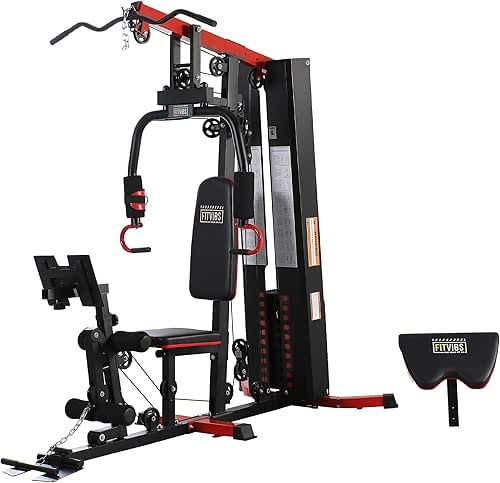
The Fitvids All-in-One Home Gym stands out for tight spaces thanks to its versatile 15-pulley system and 122.5 lb weight stack, letting you target back, arms, and core with a single footprint. Built with heavy-duty 1.5-inch steel tubing and aircraft cables, it supports up to 375 lbs user weight and 1000 lbs total, with nylon-coated cables rated for 1000 lbs. The high and low pulleys enable smooth motion across many muscles, including back, arms, and core, using steel shaft pulleys and strong wire ropes for quiet operation. It offers lat pulldowns, butterfly chest, rowing simulations, and full-body workouts in one unit.
Best For: Home gym users with limited space who want a versatile, all-in-one machine for full-body workouts.
Pros:
- Compact footprint (42x68x78 inches) and space-efficient design suitable for apartments, garages, and basements.
- Versatile 15-pulley system supports a wide range of exercises (lat pulldowns, butterfly chest, rowing simulations) for back, arms, and core.
- Durable construction: 1.5-inch steel tubing, aircraft cables rated for 1000 lbs, and a 122.5 lb weight stack for scalable resistance.
Cons:
- Maximum user weight 375 lbs may not accommodate heavier users who need higher capacity.
- 122.5 lb weight stack might limit progression for advanced lifters seeking heavier loads.
- Assembly and setup may be more complex due to multiple pulleys and components.
Factors to Consider When Choosing Small Equipment for Home Gym
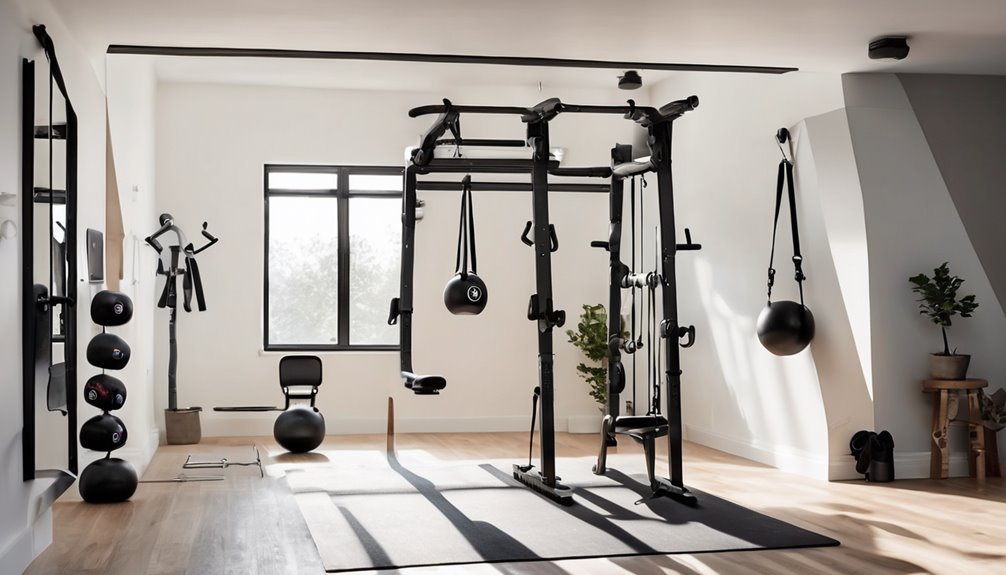
When you pick small gym gear, start with budget-friendly options that still meet quality and safety needs. Consider space-saving essentials that fit your setup without crowding, whereas ensuring versatile functionality for a range of workouts. Prioritize equipment with progressive resistance and durable construction to keep you progressing safely in a compact home gym.
Budget-Friendly Choices
Consider compact, foldable, and multi-attachment kits to maximize workouts during keeping costs down. When you pick budget-friendly gear, opt for adjustable resistance or weight stacks so one device serves multiple fitness levels without buying extra equipment. Choose lightweight, portable units with simple assembly to save space and minimize setup costs. Look for bundled sets that include essential accessories—bands, mats, and attachments—to avoid additional purchases. Compare per-use value by estimating how many distinct workouts the equipment enables within your budget and space constraints. Prioritize items that travel well and store neatly, reducing clutter and encouraging consistency. By focusing on versatile, scalable options, you’ll maintain variety, progression, and motivation without breaking the bank. Your home gym stays efficient, affordable, and ready for regular, effective training.
Space-Saving Essentials
Looking to maximize floor space? Start with foldable or compact designs, like foldable push-up boards or slim weight stacks, so you can tuck items away when you’re done. Seek multi-function systems that combine push-up boards, resistance bands, and bars to replace several bulky machines with one unit. Prioritize lightweight, portable components—ankle straps and door anchors—that store easily in small areas. Opt for equipment with stable, low-profile bases and durable materials that fit tight spaces without compromising safety. Consider wall- or door-mounted options to free up floor area and reduce clutter in your home gym. These space-saving essentials help you build effective workouts without compromising footprint.
Versatile Functionality
Versatile functionality matters since compact equipment should cover multiple movements and goals in one setup. Look for gear that supports both push/pull and upper/lower body work to maximize workout variety without adding clutter. Prioritize versatile attachments—bands, bars, ankle straps, and pulleys—that enable progressive resistance and a wide range of exercises across strength, endurance, and mobility. Choose modular systems that reconfigure easily for different muscle groups, so you don’t need multiple machines. Ensure compatibility with varied workouts, from strength and HIIT to rehabilitation, to accommodate evolving goals and fitness levels. Space efficiency and stability matter too: pick a unit that safely supports diverse exercises and stays solid during dynamic movements. In short, select adaptable pieces that scale with your training needs.
Progressive Resistance
Progressive resistance is about steadily increasing load or difficulty so your muscles keep adapting. To build a plan that lasts, choose gear with true progression: adjustable weight stacks, multiple resistance bands, and stepwise plate increments let you tailor intensity from beginner to advanced. Track your load, reps, and sets so you maintain overload without breaking form. Small equipment should provide micro-load options, like 5–10 lb steps or equivalent band tensions, enabling tiny but meaningful gains. Pair resistance increases with technique challenges—tempo shifts, range of motion changes, or advanced variations—to keep training fresh and safe. Use a structured progression plan to steadily raise demand, ensuring you grow stronger without plateaus or injury. This mindset makes compact gear truly effective.
Safety and Durability
Safety and durability should top your checklist when picking small gym gear. When you shop, look for reinforced frames, high-density materials, and solid welds to withstand repeated use and reduce failure risk. Prioritize smooth operation components like low-friction pulleys and coated cables to cut snag hazards and wear. Check weight limits and resistance ranges that match current strength and allow safe progression over time. Ensure protective features such as non-slip grips, padded seating, and stable, wide bases to prevent slips or tipping during exercises. Verify compact designs still meet durability standards, using durable composites and corrosion-resistant hardware suitable for long-term home use. Choose gear backed by solid construction and thoughtful safety features to protect you as you train.
Setup and Storage
When space is at a premium, choose equipment with a compact footprint, foldable or modular design, so you can store it out of the way when you’re done. Look for stackable or multi-attachment systems that consolidate several functions into a single unit, reducing clutter. Check weight and dimensions for storage options like closets, under-bed spaces, or vertical wall mounting. Prioritize quick and tool-free assembly and disassembly to streamline setup and stowage after workouts. Consider integrated storage for small accessories, so bands, handles, and bars stay organized and accessible. A modular unit with built-in hooks or drawers helps you keep everything in reach without taking over the room. This approach keeps your space tidy and ready for next session.
User Comfort Features
Good comfort features can make or break your consistency with small home-gym gear. Ergonomic design and padded grips reduce hand fatigue and joint strain during longer sessions, so you can push through reps without losing form. Look for an adjustable seat, backrest, and height options to support better posture across exercises. Detachable or cushioned handles and non-slip surfaces boost grip security and cut slipping risk. Quiet operation and smooth motion systems—like well-tuned pulley or cable setups—keep noise and vibration low, helping you train calmly at home. Lightweight, compact builds with easy assembly and clear instructions reduce setup stress and invite regular use. Prioritize options that blend comfort with utility for sustainable, consistent workouts in tight spaces.
Compatibility & Upgrades
Considering compatibility and upgrade options early helps you build a flexible, long-lasting home gym. Start by ensuring the small equipment uses standard attachments and compatible weight stacks or bands to integrate smoothly with your existing machines or systems. Check modularity options, such as add-on resistance bands, ankle straps, or door anchors, to upgrade versatility without a full replacement. Verify weight increments and the feel of resistance (e.g., 10 lb vs 5 lb steps) to match your current strength levels and progression needs. Confirm compatibility with common home dimensions and mounting options (floor space, wall or door attachment possibilities). Look for cross-compatibility with multi-gyms or training stations that support multiple exercises (lat pulldown, butterfly, leg extension) using the same base unit or compatible accessories.
Frequently Asked Questions
How Much Space Does Each Item Need for Setup?
Yes, you’ll need about 3 to 4 feet of clear floor space for each item. Picture a compact setup beside a door or under a window: the space looks tight, yet you still move freely. You’ll use mats and folds to carve out room, and you’ll slide gear aside when guests arrive. Keep your routines versatile, and you won’t feel boxed in—you’ll feel focused, energized, and ready to push through each rep.
Do These Machines Require Assembly Tools?
Yes, they usually require basic assembly tools. You’ll mostly need a wrench or Allen key, screwdriver, and sometimes a manual for specific bolts. Most items include all necessary hardware and clear setup steps, so you can start without extra purchases. Check the product page for the exact tool list and included hardware. If you’re unsure, contact customer support before buying to confirm what’s included and what you’ll need.
Can They Replace a Full Gym Routine?
Yes, they can replace a full gym routine, but you’ll need consistency and smart planning. Think of them as a catalyst that sparks total-body workouts you can do anywhere. Mix compound moves with cardio bursts, tailor sets to your goals, and progress over time. They’re compact, not magical, so you’ll still push hard, recover well, and stay balanced. You’ll stay motivated by tracking reps, tempo, and results.
Are There Warranties or Service Plans Available?
Yes, warranties and service plans are available. You can typically get manufacturer warranties ranging from 1 to 5 years, plus extended service plans for added coverage. Check what’s included—parts, labor, and shipping often vary. Register your product, keep receipts, and understand exclusions. For repairs, some plans offer on-site service or mail-in options. If you’re unsure, ask the retailer to confirm specific terms before you buy.
What Maintenance Is Needed for Longevity?
You maintain longevity by wiping down surfaces after use, tightening bolts monthly, and inspecting cables or straps for wear. Lubricate moving parts per manufacturer guidelines, and store equipment in a dry, shaded area to prevent rust. Exercise with proper form to reduce strain on components, and replace worn grips or padding promptly. Schedule periodic professional servicing if offered, and log maintenance to track what’s been done and when. Regular checks keep your gear safe and durable.