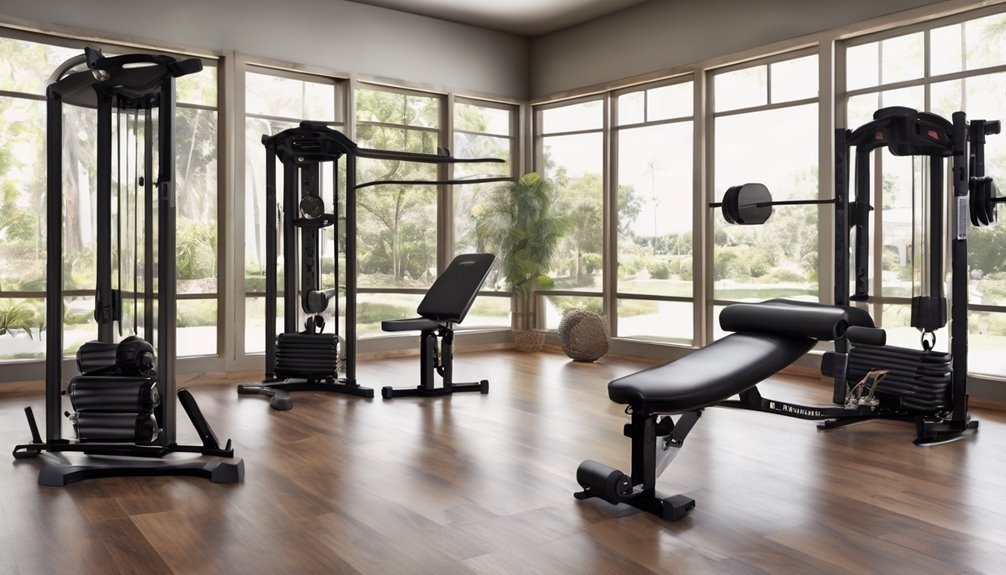
Looking for a versatile home-gym bench? The Yoleo Adjustable Weight Bench gives 84 options, solid steel, and a compact fold for small spaces. The FLYBIRD bench handles heavy lifters with up to 800 lbs, 144 positions, and a quick-step fold to shrink your footprint. The NICEPEOPLE bench pairs 660 lbs capacity with fast 8-backrest adjustments and durable wear-resistant materials. Each one suits different needs, and you’ll uncover more details if you keep exploring.
Key Takeaways
- Compare top options by adjustability range, ensuring multiple incline/decline positions for full-body workouts.
- Prioritize weight capacity (ideally 660–800+ lbs) and sturdy steel framing for safety with heavy lifts.
- Look for compact, foldable design to fit small home gyms without sacrificing stability.
- Check padding quality (high-density foam, durable PU leather) for long-term comfort and durability.
- Confirm reputable warranty and availability of replacement parts for long-term ownership.
Yoleo Adjustable Weight Bench for Full Body Workout

If you’re after a versatile bench that fits tight spaces, the Yoleo Adjustable Weight Bench stands out with 84 adjustable options for full-body workouts—including incline, decline, and flat positions—so you can tailor every set without moving equipment. Built from heavy-duty steel, it delivers stable support with a double-triangle structure and double supports. You’ll access 7 back, 4 seat, and 3 leg adjustments via a ladder-style system for quick, secure changes in seconds. When folded, it measures 31.5L x 12.6W x 13H and weighs about 23.1 pounds; unfolds to 41L x 12.6W x 42.5H. High-quality foam padding and PU leather enhance comfort. Replacement service backs quality.
Best For: fitness enthusiasts with limited space who want a versatile, budget-friendly bench for full-body workouts at home.
Pros:
- 84 adjustable options (7 back, 4 seat, 3 leg) for a wide range of exercises.
- Sturdy construction with heavy-duty steel and enhanced stability from double-triangle and double supports.
- Highly portable and compact when folded, easy to store in tight spaces.
Cons:
- 23.1 lb weight may be heavier to move for some users compared to ultra-light benches.
- Folded dimensions are still somewhat large for ultra-tight closets or small apartments.
- Padding, while high-density, may fade with heavy daily use or sweat exposure over time.
FLYBIRD Adjustable Weight Bench (800LBS) with Foldable Design and Extended Backrest for Home Gym
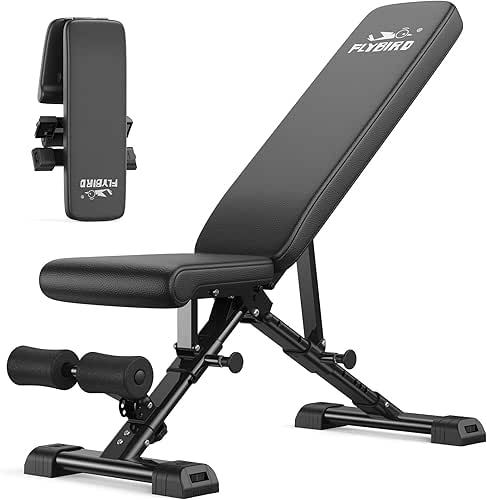
Looking for a sturdy bench that fits compact home gyms? The FLYBIRD Adjustable Weight Bench (800LBS) combines durability with space efficiency. Built with commercial-thickness steel and ASTM-Certification, it supports up to 800 lbs and endures heavy use. With 144 adjustable positions from -30° to 90°, you can flat, incline, decline, or upright press to target major muscle groups, including a -10° decline for gentle intro presses and a 90° upright lock for isolation. A 30-inch backrest and 15.7-inch seat pad deliver stable comfort, while the spring-lock system makes angle changes instant. Foldable in 3 steps, it saves 80% footprint and weighs 28.5 lbs.
Best For: Home gym users needing a sturdy, compact bench with wide adjustability and quick setup for versatile strength training.
Pros:
- 800 lbs weight capacity with commercial-thickness steel for durability.
- 144 adjustable positions (-30° to 90°) and a -10° decline plus 90° upright lock for versatile workouts.
- Foldable in 3 steps, 80% footprint reduction, lightweight at 28.5 lbs for easy storage and transport.
Cons:
- May be overkill for casual users who only need basic incline/flat options.
- 30-inch backrest and 15.7-inch seat pad might feel snug for taller or heavier lifters during certain movements.
- Assembly and folding/adjustment may require attention to ensure secure setup for new users.
NICEPEOPLE Adjustable Weight Bench for Home Gym (660LBS)
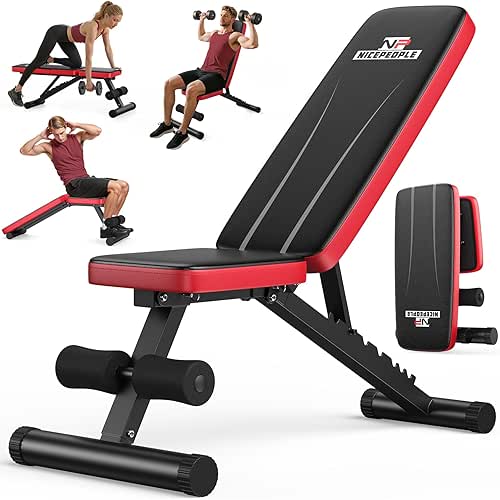
The NICEPEOPLE Adjustable Weight Bench stands out for home gyms that need quick adjustability, with 8 backrest angles you can switch in under 2 seconds to target chest, shoulders, arms, and core precisely. Built from sturdy steel, it supports up to 660 lbs, giving you solid safety during tough sets. The groove design ensures fast angle changes, while a 745mm backrest provides solid head and neck support for stability. A foldable frame with non-slip foot caps protects floors and adapts to various surfaces. Sweat-proof, wear-resistant leather keeps maintenance low, and clear manuals plus video guides help you start fast.
Best For: Home gym enthusiasts who want quick-adjusting, adjustable backrest angles with solid support and space-saving storage.
Pros:
- 8 backrest angles with quick adjustments (under 2 seconds) for precise targeting.
- Robust steel construction supporting up to 660 lbs with stable, non-slip design.
- Foldable frame and compact storage footprint, plus easy maintenance with sweat-proof leather.
Cons:
- May be bulky for extremely small spaces despite foldability.
- Assembly required; may require a trainer or manual reference for first setup.
- Leather may show wear over very long-term use with heavy sweating or rough cleaning.
Factors to Consider When Choosing Benches for Home Gym
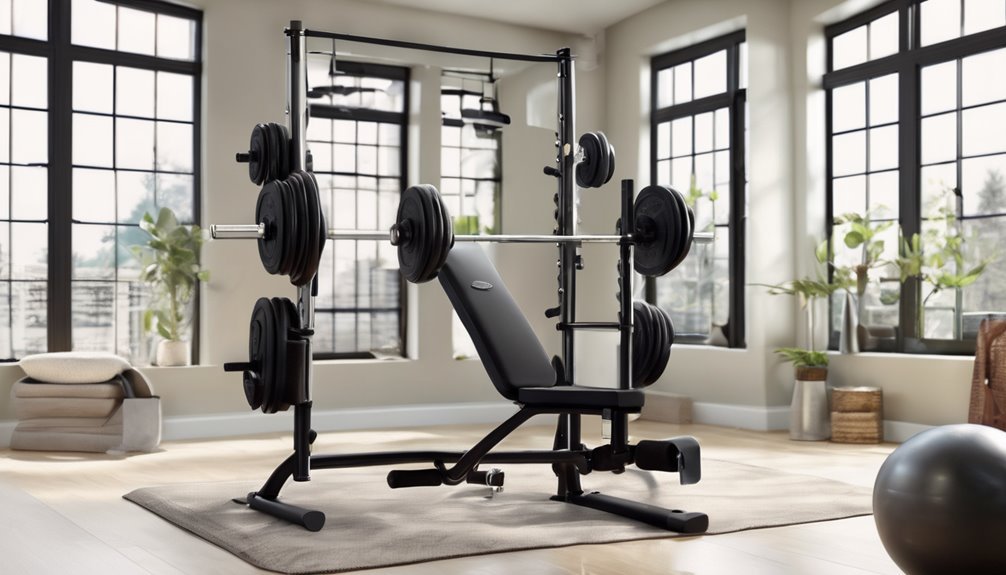
When you’re choosing a bench, start by checking adjustability range and weight capacity to match your workouts and progression. Consider foldability and storage so it fits your space, then assess build quality, materials, and the level of comfort and support you’ll feel during long sessions. Keep practicality in mind—your ideal bench should balance versatility, durability, and daily usability.
Adjustability Range Options
Considering how many angles you’ll actually use can save you from a wasted bench purchase. An adjustable bench should offer a spectrum from declines to high inclines, so you can tackle a broad range of movements without moving equipment. Look for multiple backrest positions, ideally 8–14, plus seat adjustments that optimize hip and leg alignment for different lifts. A dense range lets you target specific muscles with precision, rather than guessing angles. Quick-adjust or ladder-style mechanisms matter: they lock in changes in seconds, keeping your focus on sets rather than setup. Wider adjustment ranges and secure locking also reduce the risk of improper angles during heavy pulls or presses, boosting safety and confidence as you push closer to your goals.
Weight Capacity Limits
Weight capacity limits tell you how much weight the bench can handle safely, including your body weight and any added resistance. You’ll want a bench that matches your lifting plans, not just your current routine. Typical home benches run around 660 to 800 lbs, with premium models supporting heavier lifters. Exceeding the stated capacity risks frame damage, compromised padding, and unsafe lifts. Heavier-duty benches often use thicker steel framing and reinforced joints to stay stable under load. Remember to check both overall capacity and any per-position or per-area limits, such as backrest versus leg supports. By confirming these figures, you ensure safe setups for presses, rows, and accessory work, while preserving longevity and performance in your home gym.
Foldability and Storage
Foldability and storage can make or break a home gym, especially in small spaces. A foldable bench cuts floor footprint dramatically, with multi-step mechanisms shrinking space by up to about 80% and freeing room for other gear. When folded, dimensions commonly run roughly 9–13 inches wide and 30–32 inches long, letting you tuck it under a bed or sofa. Quick-release or pin-based folding systems speed transitions between workouts and storage, so you waste less time between sets. Lighter benches, around 20–30 pounds, boost portability, making it easier to move and store between rooms or closets. Some models keep a low profile when folded, reducing visual clutter in compact living areas. Consider these foldability and storage traits to maximize space efficiency.
Build Quality Materials
A solid bench starts with a heavy-duty steel frame and reinforced joints, such as double-triangle constructions, to keep stability under tough loads. You should prioritize frames that resist flex under heavy use, ensuring long-term performance. Check pad thickness and material: aim for at least 1.4 inches of high-density foam and PU leather for back and seat cushions, plus 2.4 inches for leg pads to boost durability and comfort. Inspect upholstery and seams for wear resistance and sweat-proof, non-slip surfaces suitable for high-rep work. Review weight capacity specifications, typically 660–800 lbs, to support progressive training with safe margins. Consider folding and locking mechanisms that offer secure use and longevity, favoring quick-adjust, ladder-style systems with proven stability. This focus protects your investment and supports consistent workouts.
Comfort and Support
When choosing a bench, comfort and support come down to how well the backrest, seat, and leg supports cushion you during a range of exercises. A bench’s backrest and seat should use high-density foam with a durable cover, like PU leather, to maintain comfort under heavy loads and resist wear. Extra-thick padding on the leg support and backrest reduces pressure points and improves stability during pressing and row movements. Frequent incline/decline adjustments, with multiple angle options, help tailor comfort across different exercises and body shapes. A wide, well-cushioned seat helps maintain proper hip and lumbar support, reducing lower back strain during presses and curls. Non-slip, durable pad materials and secure upholstery minimize movement and shift during dynamic lifts.
Space Footprint
Space footprint matters as you’ll want a bench that fits your workout area without crowding other gear. Foldable benches can dramatically cut space demands, with some models shrinking to under 10 inches wide when collapsed. Folding dimensions are commonly about 30–32 inches long, 12–16 inches wide, and 9–13 inches high in the folded state, ideal for compact storage. When unfolded, bench lengths typically run from 41 to 73 inches, so plan your area accordingly to accommodate your chosen length. Lighter benches—roughly 23–29 pounds—are easier to move for space reconfiguration, though you may trade some stability for portability. A compact design benefits apartments or rooms with limited floor space, letting you fit alongside other equipment.
Warranty and Support
Warranty and support matter after you’ve picked the right bench for space. A clearly stated warranty helps gauge long-term protection and total ownership costs. Look for the period and what it covers, such as 1-year frame replacement with longer parts coverage, plus any exclusions that affect eligibility. Confirm whether the manufacturer offers replacement services or parts availability and typical lead times if a component fails. Assess support options, including access to manuals, installation videos, and responsive customer service channels for troubleshooting. Verify the warranty stays valid under home use, considering folding or adjusting frequency and the weight limits specified. Also check who pays for shipping on returns or repairs and whether there’s on-site service or direct-to-user parts delivery for convenience. This clarity saves surprises later and keeps your workout setup reliable.
Frequently Asked Questions
How Do Weight Limits Affect Long-Term Durability and Safety?
Weight limits guide durability and safety long-term; if you exceed them, joints strain, welds fatigue, and benches wobble. So track max loads, distribute weight evenly, include safety spotters, and replace worn components before failure sneaks up on you.
Can Benches Accommodate Standing Shoulder Presses as Well?
Sure—think of your bench as a sturdy stage, but not a full orchestra: you can do standing shoulder presses with some benches, yet it’s safer and steadier when you stay seated or use a proper rack.
Are There Memory Pins or Secure Locking Mechanisms?
Yes, many benches use memory pins or secure locking mechanisms, so you can confidently adjust and lock the position without fear of sudden moves during workouts. Always guarantee pins are fully seated before lifting or pressing.
What Maintenance Is Needed to Prevent Rust or Wear?
To prevent rust and wear, regularly wipe down metal surfaces, lubricate moving parts, inspect pins and joints, tighten hardware, and store in a dry area; avoid harsh cleaners, and address corrosion spots promptly with rust-inhibiting treatment.
Do Benches Fold for Easy Storage Without Stability Loss?
Sure—many benches fold for easy storage without stability loss, if you choose models with lockable hinges and solid frames. But beware uneven floors, and test weight limits before tucking away the iron, or you’ll regret it, citizen.
Conclusion
Choosing the right bench boosts every workout, so pick one that fits your space, goals, and budget. Your gains come from consistency, not excuses, and a sturdy bench keeps you safe as you push harder. Remember: a good bench is a foundation you can build on, day after day. As the saying goes, slow and steady wins the race—stay patient, stay focused, and your home gym will pay off in strength and confidence.