If you want an effective, no-gym home workout, start with a Push Up Board with resistance bands and an ab roller wheel. This all-in-one system targets chest, shoulders, arms, and core with color-guided zones for proper form. Pair it with the Yoleo Adjustable Weight Bench for full-body versatility and adjustable incline, plus comfort. Add Ankle Resistance Bands with Cuffs for lower-body and booty moves to finish strong. Curious to see how these fit your space and goals?
Key Takeaways
- A versatile all-in-one push-up board and resistance bands setup for upper body and core, with color-coded zones guiding chest, shoulders, and back.
- A height-adjustable bench (like the Yoleo) offering multiple incline/decline positions for full-body strength and progression.
- Ankle resistance bands with cuffs for lower-body training targeting glutes, hips, and legs with secure fit.
- Compact, foldable design and easy setup to maximize space efficiency in small home gyms.
- Durable construction with secure adjustments, non-slip bases, and clear load/resistance labeling for safe, consistent workouts.
Push Up Board with Resistance Bands and Ab Roller Wheel (Home Gym)

If you want a compact, all-in-one home gym that targets every major muscle group, the Push Up Board with Resistance Bands and Ab Roller Wheel is the best fit. This system combines a foldable push-up board, 3-section bar, resistance bands, ankle straps, door anchor, and an ab roller wheel for full-body work. Color-coded areas guide chest, triceps, shoulders, and back, boosting efficiency by 80%. It replaces bulky gear with a lightweight, stable setup ideal for at-home workouts. Suitable for all levels, it scales intensity, supports upper and lower body moves, and invites you to share the setup with friends. Customer support is available within 24 hours.
Best For: individuals seeking a compact, all-in-one home gym that targets multiple muscle groups with color-guided zones and scalable intensity for all fitness levels.
Pros:
- All-in-one portable system replaces bulky gym equipment, saving space and costs.
- Color-coded push-up board targets chest, triceps, shoulders, and back for efficient workouts.
- Adjustable resistance bands, bar, and ankle straps support a wide range of upper and lower body exercises.
Cons:
- May require setup time to switch attachments between exercises.
- Some users might find the push-up board limiting for certain advanced movements.
- Durability and long-term reliability depend on proper use and occasional maintenance of bands and wheels.
Yoleo Adjustable Weight Bench for Full Body Workout

The Yoleo Adjustable Weight Bench stands out for full-body versatility with 84 adjustable positions, letting you switch quickly between incline, decline, and flat setups to target every muscle group without clutter. Built for home gyms, this foldable bench supports heavy lifts with a double-triangle steel frame for stability. Quick ladder-style adjustments offer seven back, four seat, and three leg options, so you tailor every move in seconds. When folded, it’s compact at 31.5 by 12.6 by 13 inches and weighs about 23.1 pounds, yet unfolds to 41 by 12.6 by 42.5 inches for solid full-body workouts. High-density foam and PU leather enhance comfort. Replacement service is available if issues arise.
Best For: Home gym users who need a compact, versatile, and sturdy adjustable bench for full-body workouts with quick setup.
Pros:
- 84 adjustable positions for incline, decline, and flat setups to target multiple muscle groups
- Heavy-duty double-triangle steel frame for stability during heavy lifts
- Foldable and compact design with easy ladder-style adjustments for quick changes
Cons:
- Weighs about 23.1 pounds, which, while portable, may be heavier than some ultralight benches
- Limited to bench-only usage; does not include standalone rack or additional accessories
- The padding is 1.4 inches thick on back and seat, which may feel less cushioned for some users during long sessions
Ankle Resistance Bands with Cuffs for Workout and Booty Training
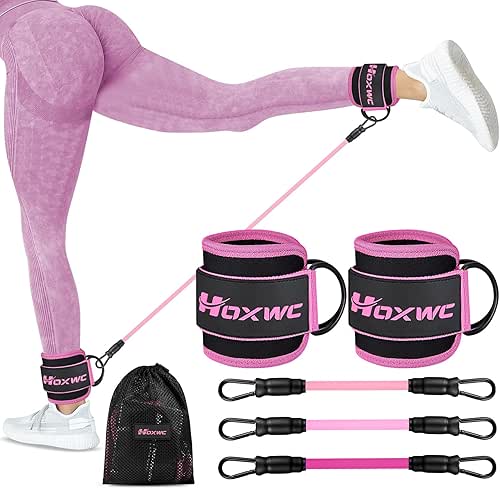
Ankle resistance bands with cuffs are ideal for anyone aiming to sculpt the lower body at home, thanks to their secure adjustable fit that stays put during tough moves like kickbacks and hip thrusts. These bands target your leg, buttock, and hip workouts, delivering focused resistance for strengthening and toning. With adjustable straps, you’ll find a comfortable, secure fit across ankle sizes, so you can concentrate on form without slips. Choose bands with different resistance levels to tailor intensity. Built from durable materials, they’re designed for long-lasting use and travel-friendly portability, fitting easily into bags for workouts anywhere.
Best For: Individuals seeking secure, adjustable ankle resistance for targeted lower-body workouts (legs, glutes, hips) at home, in the gym, or while traveling.
Pros:
- Adjustable straps provide a secure, comfortable fit for a range of ankle sizes.
- Targeted resistance helps strengthen and tone lower-body muscles (legs, glutes, hips).
- Durable, high-quality materials offer long-lasting use and portability for travel.
Cons:
- May require multiple resistance bands to achieve a full spectrum of difficulty.
- Some users might experience limited ankle comfort if bands are too tight or loose.
- Requires consistent setup and belt/brace alignment during complex moves to prevent slipping.
Factors to Consider When Choosing Equipment Needed for Home Workout
When you choose home workout gear, start by measuring your space to match equipment size and storage needs. Think about budget, but prioritize function and versatility over novelty, so you get more while spending wisely. Look for items with adjustable comfort, broad exercise options, and easy portability to keep your routine flexible.
Space Requirements
Are you maximizing your home gym space without sacrificing workouts? Start by measuring your floor space and ceiling height so a push-up board, incline bench, or resistance bands fit without obstruction. Consider the footprint of foldable versus fixed equipment to know how much surface area you need when stored and in use. Account for clearance around gear for full range of motion, like arm extension during push-ups or bench adjustments, to avoid collisions. Plan for dedicated storage or a corner area to keep bands, straps, and wheels organized and accessible. Evaluate whether multi-use or modular equipment can replace several single-purpose items, reducing overall space needs while preserving workout versatility. Your setup should balance efficiency, safety, and future flexibility.
Budget Considerations
Budget considerations start with a clear ceiling and a clear plan. Set a maximum initial investment and weigh cost per use to ensure long-term value for your home gym. Track both upfront price and ongoing costs for replacements, upgrades, or extra accessories to avoid hidden expenses. Balance budget with versatility, prioritizing equipment that supports multiple exercises to maximize your workouts with a single purchase. Factor in space constraints and storage costs, opting for compact, foldable, or modular pieces that fit your available area. Assess quality and durability data, such as materials and warranty, to reduce future replacement costs and downtime. Aim for gear that delivers sustained performance, minimizing wasted dollars while expanding your training possibilities.
Versatility Range
Versatility is king in a home gym, since a single setup should handle strength, cardio, and flexibility without demanding more gear. A broad versatility range lets one setup support multiple modalities, reducing the need for extra equipment. Look for equipment with adjustable features like incline/decline benches, variable resistance, or multiple color-coded zones to target different muscle groups and progression levels without buying new gear. Interchangeable attachments—bands, cuffs, rollers—expand exercise options from upper to lower body, boosting overall training variety in a compact space. Foldable or modular designs improve versatility by enabling easy reconfiguration for different routines and storage in small areas. A wide resistance spectrum, from light to heavy bands or plates, supports progression for beginners through advanced users within the same system.
Adjustable Comfort
Adjustable comfort is vital for a home workout setup since it guarantees your gear fits your body and reduces strain during each move. Look for quick-setup adjustments, like ladder-style or numbered positions, so you can change angles or heights in seconds and keep your flow uninterrupted. Padded components on the back, seat, and handles boost comfort during longer sessions and lessen pressure points. Choose equipment with adjustable resistance or incline ranges so you can progress gradually, ensuring your workload matches your strength gains without causing discomfort. Secure adjustment mechanisms—locking pins and sturdy braces—prevent slips or sudden changes that could derail form or cause injury. Prioritize reliable construction and smooth, intuitive adjustments for a safer, more comfortable routine.
Portability/Storage
When choosing equipment for a home workout, portability and storage matter as much as performance. Light and foldable gear fits small spaces and stores after sessions, so you stay consistent without clutter. Opt for compact dimensions and quick-setup features to cut setup time and keep your routine steady. Multi-function equipment with integrated accessories reduces the need for separate machines, freeing up floor area. Prioritize sturdy construction and stable bases to prevent wobble in tight rooms. Easy transport options, like carry handles or included bags, boost usability when moving gear between rooms or tucking it away after a workout. This approach helps you maintain an efficient, organized home gym without sacrificing workout variety.
Build Quality/Durability
Building a home gym that lasts starts with sturdy construction and reliable parts. When you shop, choose equipment with heavy-duty frames—steel or reinforced alloys—and 1.4-inch-thick pads or thicker for durable support during intense workouts. Look for double-stitched seams, reinforced joints, and non-slip feet or bases to guarantee stable performance and reduce wear over time. Inspect for high-density foam and PU leather padding to resist compression wear and maintain comfort during long sessions. Verify load ratings and resistance band tensions are clearly labeled, with secure attachment points to prevent snapping or detaching under stress. Prefer foldable or compact designs built with robust hinges and locking mechanisms that maintain rigidity and safety after repeated use. Prioritize these durability factors to extend your equipment’s life.
Frequently Asked Questions
What’s the Best Budget Setup for a Small Apartment?
A budget setup for a small apartment: you’ll want a compact resistance band set, adjustable dumbbells, a foldable yoga mat, and a door anchor. Add a jump rope, suspension trainer, and a small stability ball when possible.
How Should I Maintain and Sanitize Home Workout Gear?
Yes—wipe gear after every session, then air dry and store it separate from clean items. Sanitize with a mild disinfectant weekly, and wash handles, straps, and mats in warm water to prevent buildup and odors.
Can Equipment Replace a Personal Trainer for Beginners?
No, equipment can’t fully replace a personal trainer for beginners. It helps, but you still need guidance, feedback, and programming adjustments to ensure safe form, progressions, and personalized goals. Consider occasional coaching plus clear instructional resources.
Which Items Offer the Most Versatility for Full-Body Workouts?
Kettlebell, resistance bands, and a single adjustable dumbbell offer the most versatility for full-body workouts. You’ll swap grips, move through compound patterns, and target strength, mobility, and cardio—without extra gear or gym fees slowing you down.
How Often Should I Replace Wear-And-Tear Fitness Gear?
You should replace wear-and-tear fitness gear every 6–12 months, or sooner if you notice cracks, fraying, or loss of cushioning. Think of it like tires; worn gear slows you down and risks injuries. Inspect regularly, replace proactively. Stay safe.
Conclusion
You’ve spotted the essentials, but the real question lingers: what happens once you bring them home? Each piece promises gains, yet your consistency will decide the outcome. Will the Push Up Board, adjustable bench, and ankle cuffs push you toward bold workouts or just collect dust in a corner? Start tonight—set a simple routine, feel the first burn, and let momentum pull you forward. The next session could unlock the breakthrough you’ve been waiting for. Stay ready. The results might surprise you.