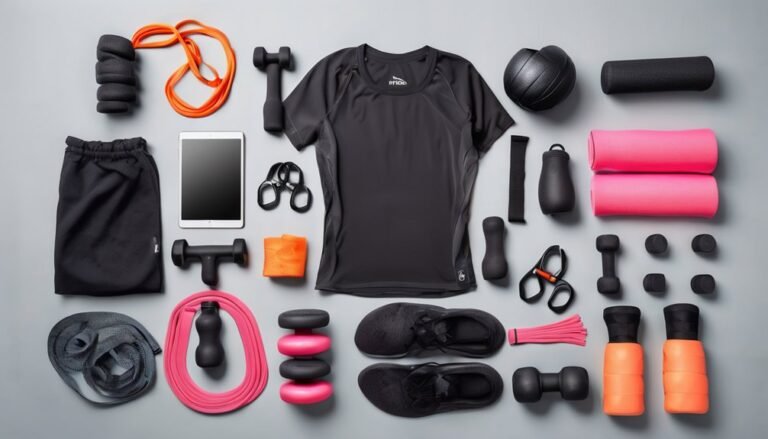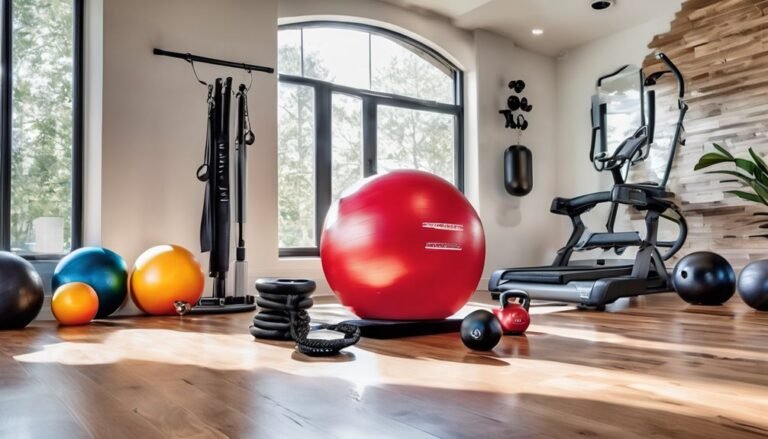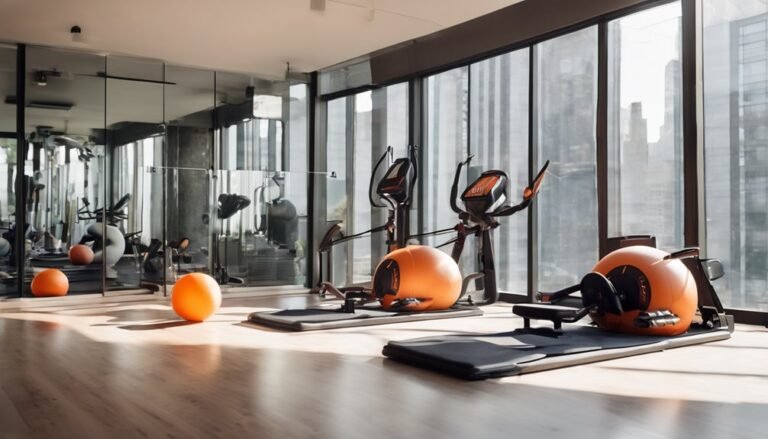

Here are five smart picks to quietly transform your garage into a compact, versatile gym. Start with the Yoleo Adjustable Weight Bench for full-body versatility and easy storage, then layer in the ProsourceFit Puzzle Exercise Mat for a cushioned, non-slip floor. Add the Mikolo Power Cage with Cable Crossover System for eight workout options, the Power Cage Multi-Functional Rack for stability and attachments, and the Mikolo Home Gym with a 150LBS weight stack for diverse movements. Curious how they fit together in your space?
Key Takeaways
- All-in-one power cage with cable crossover offers multiple exercises in a single footprint, saving garage space and reducing equipment clutter.
- Adjustable benches with foldable designs maximize versatility while folding away for easy storage.
- Interlocking puzzle mats provide a cushioned, non-slip floor, protecting concrete and reducing noise during workouts.
- High-capacity rigs (up to 1000 lbs) and sturdy frames ensure safe heavy lifting without bulk or tipping in tight spaces.
- Quick-adjust systems and diverse attachments (lat pulldown, low row, leg extensions) enable varied routines with minimal setup.
Yoleo Adjustable Weight Bench for Full Body Workout

Looking for a compact, versatile bench that fits tight spaces? The Yoleo Adjustable Weight Bench is built for full body workouts in home gyms. Foldable for easy storage, it supports incline, decline, or flat positions with a sturdy double-triangle frame. You get 84 adjustments across 7 back, 4 seat, and 3 leg options, with ladder-style changes that lock in seconds. It weighs about 23.1 pounds and unfolds to a 41L x 12.6W x 42.5H footprint, fitting into small rooms. Comfort comes from high-density foam pads and PU leather, plus extra leg foam for solid drive. Warranty covers replacements if needed.
Best For: Home gym users who need a compact, versatile bench that folds away yet supports incline, decline, and flat positions with solid stability.
Pros:
- 84 adjustable options across back, seat, and leg supports for customizable workouts
- Foldable, lightweight design (about 23.1 lb) with compact folded footprint for easy storage
- Sturdy double-triangle frame and high-density foam/PU leather pads for comfort and durability
Cons:
- May have a limited max weight capacity not specified here (potential consideration for heavier lifters)
- Assembly and adjustments, while quick, require some setup and knob/lock handling
- Limited by being a single bench; may require additional equipment for a full range of exercises
ProsourceFit Puzzle Exercise Mat ½ in EVA Interlocking Foam Floor Tiles for Home Gym, 24 in x 24 in x ½ in, 48 Sq Ft – 12 Tiles

If you’re aiming to cushion every step and protect your garage floor without sacrificing space, the ProsourceFit Puzzle Exercise Mat is the best choice for small, multipurpose workout areas. These ½-inch thick EVA foam tiles interlock, creating a 48 sq ft surface with 12 tiles that fit neatly in tight spaces. Each tile measures 24 by 24 inches, offering solid cushioning and a non-skid surface for safety. They’re water-resistant, easy to clean with warm soap and water, and lightweight for quick setup and removal. Note that foam may compress under heavy objects, causing minor surface variation.
Best For: small, multipurpose workout areas or home garages needing a cushioned, non-slip floor underlayment that’s easy to install and remove.
Pros:
- ½-inch thick EVA foam provides solid cushioning and comfort underfoot
- Interlocking tiles create a tight, easy-to-assemble 48 sq ft surface with portable setup
- Water-resistant and easy to clean with warm soap and water
Cons:
- Foam may compress under heavy objects, causing minor surface variation
- Some color and texture variation may occur between production batches
- Not ideal for high-heat environments or direct exposure to sharp objects
Mikolo Power Cage with Cable Crossover System and Lat Pulldown (1500 lbs)
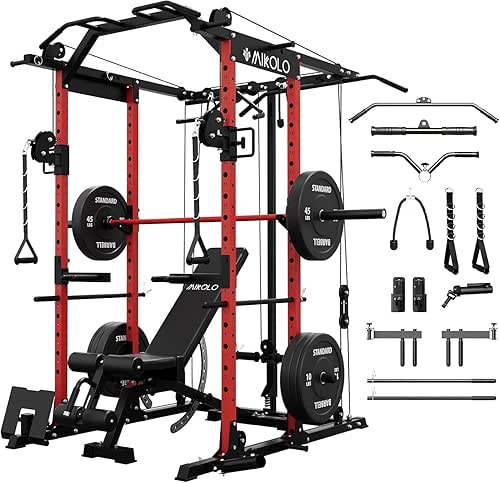
The Mikolo Power Cage with Cable Crossover System and Lat Pulldown stands out for buyers seeking a compact, all-in-one gym that doesn’t compromise on versatility. This 8-in-1 setup combines power rack, cable crossover, lat pulldown, low row, chin-up, dip, core trainer, and resistance stations, letting you perform limitless movements in a small footprint. It includes an adjustable bench, 7ft Olympic barbell, and 230lbs bumper plates. With a true power cage 56.5”L×67.5”W×86.4”H and 230 lbs weight, plus upgraded four-roll pulley system, you gain stable, smooth operation and durable long-term performance. Storage pins, hooks, and bar holder keep your space organized.
Best For: Individuals seeking an all-in-one, space-saving home gym that delivers versatility across racks, cables, and multi-station workouts without sacrificing stability.
Pros:
- Versatile 8-in-1 setup combines power rack, cable crossover, lat pulldown, low row, chin-up, dip, core trainer, and resistance stations.
- Compact footprint with true power cage dimensions and integrated storage pins, hooks, and a bar holder for organized space.
- Stable, durable construction with upgraded four-roll pulley system and eight reinforcing tabs for long-term reliability.
Cons:
- The size, while compact for a multi-function unit, may still dominate smaller rooms or tight apartments.
- The included weight set (230 lbs) may be limiting for advanced lifters seeking heavier resistance.
- Assembly and setup could be more time-intensive due to multiple components and attachments.
Power Cage Multi-Functional Power Rack with J-Hooks Dip Handles Landmine Attachment and Optional Cable Pulley System for Home Gym
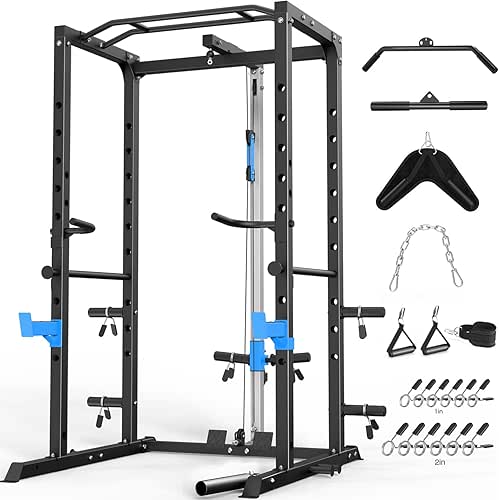
For those seeking a versatile, all-in-one home gym solution, the Power Cage Multi-Functional Power Rack stands out with its integrated J-Hooks, dip handles, landmine attachment, and optional cable pulley system. You get a 1.5mm steel frame with 50x50mm uprights, extra reinforcing tab, and wide bases to resist tipping, plus 1.14-inch hole spacing for precise adjustability. It supports up to 1000 pounds and offers 10-level j-hook/safety bar heights, 3-level dip handle adjustments, and bottom-hole push-ups. The included pulley system, tricep rope, ankle strap, lat bar, and weight storage pegs enhance full-body training in one device.
Best For: Home gym enthusiasts who want a single, space-efficient power rack with integrated attachments and versatile training options.
Pros:
- Extremely versatile with J-Hooks, dip handles, landmine, and optional cable pulley system for a wide range of exercises.
- High build quality (1.5mm steel, 50x50mm uprights) and strong 1000 lb capacity with base design to resist tipping.
- Thoughtful organization and convenience features (built-in weight plate storage pegs, 360-degree landmine, multiple accessory inclusions).
Cons:
- May require a larger footprint due to the cage dimensions and wide bases.
- Could be heavier and more challenging to move or install compared to smaller racks.
- Optional pulley system may add cost and complexity for users who don’t need it.
Mikolo Home Gym with 150LBS Weight Stack (Multifunctional Exercise Equipment)
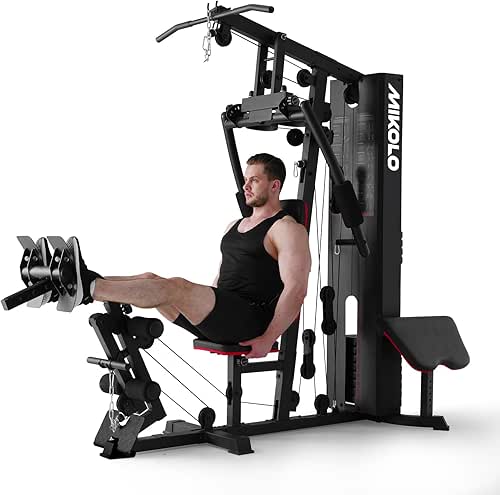
Looking for a compact, all-in-one option that covers more than a dozen exercises without constant weight changes? The Mikolo Home Gym centers on a 150LBS weight stack, delivering over 90 exercises with dual pulley systems, including PEC fly, lat pulldown, low row, chest press, leg extension, leg press, preacher curl, core trainer, calf work, seated row, and mid row. Built from 14-gauge steel, its sturdy frame and counterweight block ensure safety and durability. Quick weight adjustments come via the integrated stack, saving time. With replaceable preacher pads, leg-press accessories, and adjustable handles, you tailor workouts to height and goals. A movement guide supports varied routines.
Best For: Individuals seeking a compact, all-in-one home gym with quick-adjust weight selection and a versatile, multi-station setup for full-body training.
Pros:
- 90+ exercises and multiple pulley systems in one compact unit, covering major muscle groups.
- 150LBS weight stack with integrated quick-adjustments for faster transitions and efficiency.
- Durable 14-gauge steel construction with stable design and replaceable pads/accessories for customization.
Cons:
- May still be sizable for very small spaces despite being described as compact.
- Limited weight progression beyond 150LBS could be a drawback for advanced lifters.
- Assembly and setup might require more time and effort compared to standalone machines or free weights.
Factors to Consider When Choosing Home Gym Equipment for Garage
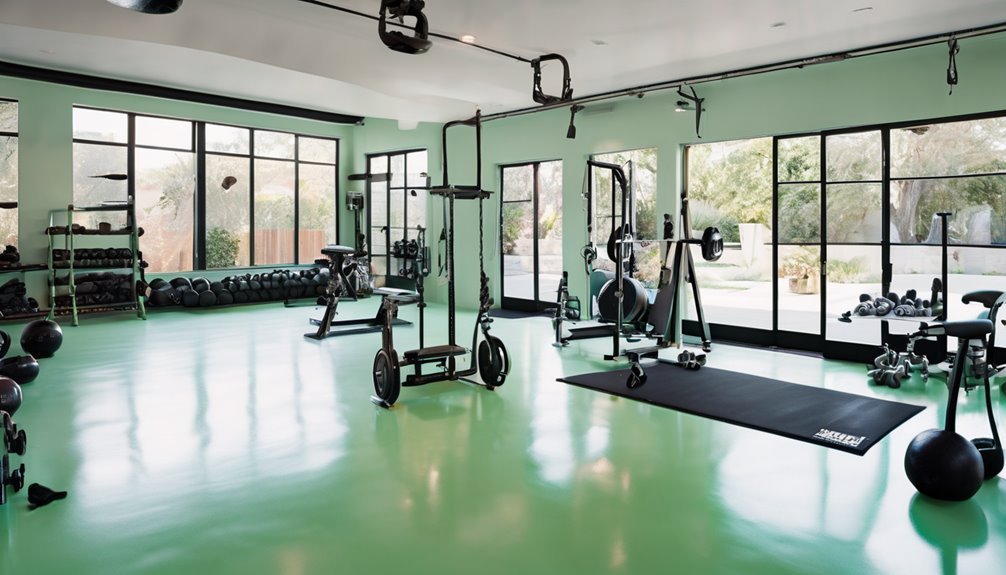
When choosing gear for your garage, prioritize Space Optimization to fit everything you need without crowding the room. Consider Weight Capacity, so your workouts stay safe as you push heavier loads, and check Adjustability Range to grow with you. Durability matters too, along with Accessory Variety, ensuring you have the core setup plus useful add-ons for future upgrades.
Space Optimization
Striking the right balance between function and space starts with choosing equipment that folds, nests, or fits compactly into your garage. Opt for foldable or compact footprints to maximize floor space when you’re not using the gear. Prioritize multi-function machines, like power cages with integrated benches, to reduce overall area needed. Look for adjustable components—back, seat, and leg positions—to avoid buying several single-use units. Consider approximate unfolded dimensions and ensure clear circulation space around the machine for safe movement. Use interlocking floor mats to define your workout area and protect flooring without expanding footprint. This approach lets you maintain functional workouts while preserving room for airflow, storage, and easy access, so your garage stays organized and ready for any session you plan.
Weight Capacity
You’ve got the space optimization basics down, now it’s time to lock in safety and longevity with weight capacity. Weight capacity is the maximum load your frame, pulleys, and attachments can safely handle during exercises, directly affecting safety and supported movements. Power cages and racks usually specify a total system capacity, like 1000–1500+ lbs, to cover heavy lifts such as squats and bench presses. Weight stacks on multifunction machines determine available resistance for isolation movements and progression. Make sure the weight stack and plate-loaded options coordinate with your planned lifts to avoid outgrowing the equipment quickly. Consider future expansion too—higher-rated machines let you add plates or upgrade components without replacing the whole unit.
Adjustability Range
Wondering how far your gear can bend to fit your routine? An adjustable range determines how many positions a bench, rack, or leg curl/extension can move through, shaping exercise variety from incline to flat or decline. A broader adjustment ladder (for example, 7 back angles plus multiple seat and leg positions) enables targeting different muscle groups with a single piece of equipment. Quick-change or ladder-style adjustment improves workout flow by reducing setup time between exercises. Sufficient range should cover both incline/horizontal for pressing and from flat to incline for rows and accessory movements. When evaluating adjustability, verify the stability of each locked position to ensure safety during heavy lifts. Prioritize smooth, positive locks and clear markings to avoid guesswork mid-session.
Build Durability
Durability is the backbone of a garage gym that can stand up to heavy use and long-term wear. When you choose equipment, prioritize 1.5mm thick steel frames with reinforced bases and multiple tabs to maximize stability during heavy lifts. Opt for power cages or multi-gym frames with wide bases and locking joints to resist tipping under dynamic movements. Check weight capacity specs—look for 1000+ lbs for cages or 1500+ lbs for multi-gyms—to ensure durable performance with heavy users and plates. Ensure high-density padding (1.4–2.0 inches) and durable PU leather for long-lasting comfort under repeated use. Verify secure, easy-to-use adjustment mechanisms (ladder-style or multi-position) that maintain rigidity throughout workouts.
Accessory Variety
Accessory variety determines how many muscle groups you can train without swapping machines, boosting overall workout diversity in a garage setup. When you choose equipment with more included attachments—pulleys, bars, racks, dip handles—you expand options for upper, lower, and core workouts, making sessions more efficient. Interchangeable or upgradeable accessories enable progressive overload so your strength grows with the system, not just the ceiling. Built-in storage for plates, pins, and handles keeps your space tidy, minimizing setup time and maximizing workout time. Compatibility with common standards—2-inch or 1-inch weights, standard plates, universal bars—ensures future accessory additions fit existing gear, protecting your investment. Prioritize versatile attachments and organized design to sustain long-term training variety without clutter or constraints.
Installation & Storage
Choosing the right home gym for your garage means thinking about where and how you’ll use it, not just what it can do. First, measure your space and leave a clear footprint for folded and unfolded dimensions, plus room to move safely. Check the base width, depth, and stability features to prevent tipping during use. Confirm the maximum weight capacity and consider how storage or stacking affects tall or heavy components when not in use. Look for compact, foldable designs or vertical storage options to maximize floor space. Ensure you have a dedicated, level area with proper flooring or mats to support heavy loads and protect the garage surface. Prioritize stability, accessibility, and easy, safe setup.
Frequently Asked Questions
How Much Space Do I Need for a Home Gym Setup?
You’ll need about 150 to 250 square feet for a versatile setup, with at least 8 feet of ceiling clearance. Measure equipment footprints, leave walkways, and leave extra space for stretching and safety, plus room to expand later.
Is Noise Reduction Important for Garage Workouts?
Noise reduction is important for garage workouts. It keeps neighbors and your inside space peaceful, so you can blast through routines without rattling the whole block, and you won’t wake up the sleeping dog next door.
Which Equipment Is Best for Full-Body Routines?
For full-body routines, you should pick a squat rack or power rack, a versatile adjustable bench, a set of dumbbells, a barbell with plates, and a cable machine or resistance bands to cover pushes, pulls, legs, and core efficiently.
How Do I Ensure Safety With High-Weight Racks?
Decide that safety first bears out: secure racks, inspect welds, and follow manufacturer limits. Practice with a spotter, use collars, and keep loads within rated capacity. Regular checks prevent accidents, and clear the area before lifts.
Can I Expand My Gym Later Without Reconfiguring?
Yes, you can expand later by modular frames and compatible accessories, planning anchor points now, and keeping future rack and flooring compatible, so you won’t rearrange extensively. Prioritize scalable layouts, clear walkways, and weight limits.
Conclusion
Transform your garage into a focused workout haven with gear that fits your space and goals. Prioritize a solid foundation, like a versatile rack and stable floor mats, then add options that grow with you, from benches to cable systems. Think of your setup as a personal compass—each piece pointing you toward consistency. Start small, stay consistent, and upgrade thoughtfully as your strength and routine evolve. Your quiet, effective gym is within reach.