
For a stronger belly, experts back three top picks you can use at home. Start with a Multifunction Tension Rope, which uses natural latex bands for total core engagement across upper, lower, and oblique muscles. Add a JKSHMYT Weighted Hula Hoop for targeted waist work and steady calorie burn. Finish with the MERACH Ab Machine, a foldable trainer that supports progressive intensity while protecting knees and elbows. Want more details and setup tips? Keep going to learn more.
Key Takeaways
- Elastic resistance bands and adjustable tension gear support progressive belly-strength training with portable home-use options.
- Ab machines with multiple incline/height settings offer customizable intensity and help protect joints during core work.
- Equipment with thick padding, ergonomic grips, and cushioned kneepads enhances comfort for longer abdominal sessions.
- Foldable, compact designs improve space efficiency while maintaining safe, stable bases for crunches and planks.
- Look for clear assembly, regular safety checks, and durable materials to sustain consistent belly-focused workouts.
Multifunction Tension Rope (Elastic Yoga Pedal Puller) Natural Latex Resistance Band for Abdomen/Waist/Arm/Leg Training
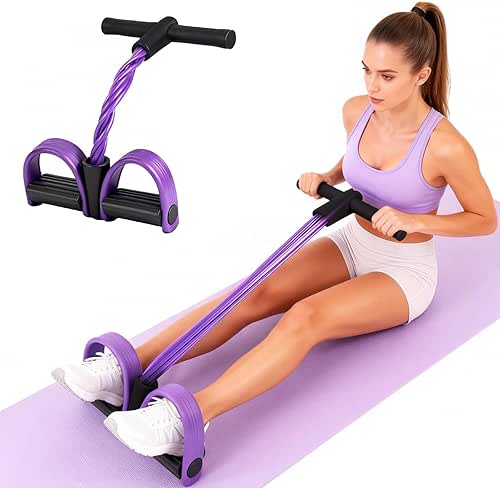
If you want a compact, all-in-one workout tool that targets your abdomen, arms, and legs without switching devices, the Multifunction Tension Rope stands out. This elastic yoga pedal puller uses natural latex bands with six tubes for high tensile strength and elasticity, plus comfortable foam grips and pedals. At about 0.67 lb, it’s lightweight and portable, built to resist fraying and maintain shape. It strengthens the core and tones the tummy, arms, shoulders, legs, and butt, while improving range of motion and joint mobility. Ideal for home, office, or outdoor workouts and compatible with various programs.
Best For: Individuals seeking an all-in-one, portable resistance tool for targeting the abdomen, arms, legs, and core during home, office, or outdoor workouts.
Pros:
- Versatile with six tubes for high tensile strength and elasticity
- Lightweight and portable (about 0.67 lb) for easy storage and travel
- Comfortable use with superior foam grips and pedals and sweat-absorbing design
Cons:
- May require space at home or office to set up for safe use
- Six-tube resistance may be too intense for complete beginners without a tolerance buildup
- Some users may prefer individual bands for isolated muscle work or specific programs
JKSHMYT Weighted Hula Hoop with Detachable Links (47 Inch)

The JKSHMYT Weighted Hula Hoop with Detachable Links (47 Inch) stands out for beginners and plus-size users who want a customizable routine, thanks to its 24 detachable links and a 0.7 lb gravity ball that make it easy to tailor weight and motion. You can fit waist sizes from 26 to 47 inches, adjusting tension as you progress. Daily use of about 30 minutes helps burn roughly 700 calories, targeting the waist, abdomen, and buttocks. Crafted from durable ABS, it resists aging and keeps performance steady. It’s beginner-friendly, simple to master, and versatile for gradual intensity increases.
Best For: Beginners and plus-size individuals looking for a customizable, low-barrier-weighted hoop workout that can be adjusted as fitness improves.
Pros:
- 24 detachable links with a 0.7 lb gravity ball allow easy weight customization
- Fits a wide waist range from 26 to 47 inches for versatile users
- Durable ABS construction and beginner-friendly design
Cons:
- May require time to master proper technique for optimal results
- Heavier setup could be less portable when fully assembled
- Calorie burn estimates (about 700 per 30 minutes) can vary by user and effort
MERACH Ab Machine, Ab Workout Equipment, Adjustable Ab Trainer Machine for Abs Workout at Home Gym, Foldable, Knee Protection, Abdominal Trainer for Stomach Workout
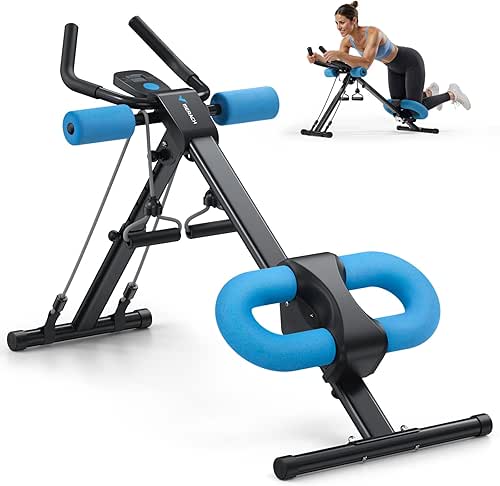
The MERACH Ab Machine stands out for home workouts with adjustable intensity and cushioning that keep your knees and elbows comfortable as you push toward defined abs. This ab trainer targets belly fat and helps you sculpt six-pack lines, with versatility for arms and glutes. Adjust to 2 incline settings and 5 height levels, matching your fitness level and progress. Thick padding protects knees and elbows, while silent rollers ensure a smooth ride. The built-in LCD tracks reps, time, and calories, so you monitor gains. Foldable design makes storage easy, and assembly is beginner-friendly with reliable customer support.
Best For: individuals seeking an adjustable, foldable at-home ab trainer that cushions knees/elbows and tracks progress.
Pros:
- Adjustable intensity with 2 incline settings and 5 height levels to match fitness level and progression
- Thick knee and elbow padding plus silent rollers for comfortable, longer workouts
- Built-in LCD displays reps, time, and calories, aiding progress tracking and planning
Cons:
- May be bulky for very small spaces despite foldability
- Limited exercise versatility beyond abs, arms, and glutes compared to full multi-gym systems
- Assembly, while beginner-friendly, can require careful alignment for smooth operation
Factors to Consider When Choosing Exercise Equipment for Belly

When you choose belly-focused gear, check the resistance level and how it matches your current strength to avoid frustration or injury. Consider comfort and fit—materials, padding, and adjustability—to stay motivated during longer sessions, not just quick reps. Also weigh versatility, portability, durability, and safety to ensure you get a practical, long-lasting tool you can use at home without sacrificing space or peace of mind.
Resistance Level Specificity
Choosing exercise gear with clear resistance levels helps you progress safely and effectively for belly training. Look for equipment with labeled levels like light, medium, or heavy to ensure progressive overload for belly-focused workouts. For elastic bands, verify total tensile strength (in pounds) and tube count to gauge overall resistance provided. Adjustable options, such as multiple incline settings or detachable links, support gradual load increases as abdominal strength improves. Ensure the device delivers consistent resistance throughout the range of motion to maintain effective stomach-targeting tension. Compare both maximum resistance capacity and the recommended user proficiency to match difficulty with your current abdominal training level. This specificity helps you choose gear that scales with you, avoiding plateaus and overstress.
Comfort and Fit
Comfort and fit matter as you pick belly-training gear, since comfy, stable equipment keeps you in proper form longer and reduces risk of strain. When sizing up options, look for thick foam padding or knee/elbow supports to ease longer sessions and prevent nagging discomfort. Ergonomic grips and non-slip pedals help you maintain stable form and minimize unintended twists or slips. Favor adjustable features—incline, height, or resistance—to ensure a comfy, secure feel across body sizes and fitness levels. Choose compact, foldable designs that fit your space yet deliver adequate cushioning and support for consistent use. Finally, inspect materials for low deformation and sweat resistance, so comfort and shape endure as you progress toward a stronger belly.
Versatility of Uses
Versatility matters as one device should support more than just belly training. Look for equipment with multiple exercise modes—abdominal, arms, and legs—to maximize belly-focused work in a single device. Prefer gear that supports both weighted and resistance-based movements to target fat loss and muscle toning around the abdomen. Choose products offering adjustable resistance levels or incline settings to tailor intensity as you improve. Favor compact, foldable, or modular designs that enable seamless transitions between core workouts and full-body routines. Seek devices compatible with various workout programs, including yoga, Pilates, and HIIT, to diversify belly-specific sessions. This versatility helps you evolve routines without buying new gear, while keeping sessions efficient, engaging, and progressively challenging.
Portability and Storage
Considering portability and storage can save you space without sacrificing function. Look for compact or foldable designs that minimize space when stored, such as foldable frames or collapsible components. Check overall weight and portability, aiming for lightweight models (e.g., under 1.0–1.5 kg) that are easy to carry between home and gym. Prioritize built-in carry handles, dual-use bags, or included storage solutions to simplify transport and organization. Consider products with detachable or modular parts to reduce size for storage without sacrificing functionality. Assess whether the equipment can be quickly assembled or disassembled to save space during frequent use or travel. This approach helps you keep essential belly-building gear accessible without clutter.
Durability and Safety
Durability and safety matter most when choosing belly exercise gear since you want reliable support through tough sets. Look for reinforced joints, high-fidelity plastics, or metal frames that resist cracking or bending during repetitive abdominal movements. Prioritize devices with non-slip, cushioned kneepads or grips and stable bases to reduce slips that could cause injury during crunches or planks. Check weight and tension ratings that exceed typical user load to prevent sudden failures during intense sessions. Ensure materials resist sweat, moisture, and abrasion to prevent premature wear. Verify safety features such as protective covers, smooth-rolling components, and clear assembly instructions to minimize risk during setup and use. Choose equipment you can trust, and inspect it regularly before every workout.
Frequently Asked Questions
How Often Should I Use Belly-Focused Equipment Weekly?
You should use belly-focused equipment about three to four times weekly. Aim for 20–30 minutes per session, varying intensity, and allow at least one rest day between sessions to support recovery and consistent progress. Adjust based on fatigue and goals.
Are These Devices Safe for Beginners With Back Pain?
Around 70% report relief with guided programs; yes, these devices can be safe for beginners with back pain if you choose low-impact options, start slow, use proper form, and consult a clinician before starting.
Can I Target Upper and Lower Abs Separately?
Yes, you can target upper and lower abs separately, but with focus and proper form: do controlled crunch variations for uppers and leg lowers or hollow-body holds for lowers, all while avoiding strain and listening to back, adjusting difficulty as needed.
Do These Products Require Professional Assembly or Setup?
Yes, most wheels don’t ship assembled, and you’ll usually set them up yourself. If manuals scare you, many products include quick-start guides. Expect straightforward steps, some tools, and about 15–30 minutes, depending on the device.
Which Equipment Offers the Best Hidden-Core Benefits?
The best hidden-core benefits come from a stability ball and plyo box, you’ll feel deeper core engage, better balance, and improved posture with consistent use, so incorporate them into short, focused sessions weekly.
Conclusion
You’ve got three solid options for a stronger belly, but the key is consistency and safety. Pick equipment that fits your space, budget, and goals, then train regularly with proper form. Remember: tools amplify effort, they don’t replace it. As the old saying goes, progress is a voyage, not a sprint—step by step you’ll build strength. So stay steady, listen to your body, and let discipline be your compass toward a firmer core.